 Business: A Guide](https://file-host.link/website/rvabusinessbrokers-p5a2ad/assets/blog-images/596e3b43-92ec-46a7-9508-775ffa99d890/1791457578607061_d3b561cef1fd4abd8290d759efb07c32/2x_360.webp)
Introduction
Selling a medical spa involves more than listing equipment, a lease, and a client roster. Buyers dig into financial performance, clinical operations, compliance records, staff retention, and whether the business can run without you in the building.
The medical aesthetics industry has grown fast. The U.S. had 10,488 medical spas in 2023, with average annual revenue of $1,398,833, according to AmSpa's 2024 State of the Industry report. Revenue isn't profit, though, and buyers know the difference.
Most sellers worry about the same things: setting a defensible price, protecting patient and staff confidentiality, keeping key providers through the transition, and avoiding surprises during due diligence. This guide walks through preparation, valuation, buyer strategy, and closing, with pointers on where legal, tax, and healthcare advisers need to be involved.
Key Takeaways
- A medical spa's value rests on cash flow, provider capacity, and transferable operations—not revenue alone.
- Clean financials and reduced owner dependence attract qualified buyers.
- NDAs and staged disclosure protect sensitive information throughout the sale.
- Have healthcare counsel and tax advisors review licensing, patient records, and deal structure before you sign.
How to Prepare Your Medical Spa for Sale
Preparation should start one to five years before you plan to exit, not the month you decide to sell. That lead time gives you room to improve profitability, strengthen management, replace aging equipment, and close compliance gaps before a buyer ever sees your numbers.
Review Your Business Like a Buyer Would
Look at your spa the way a stranger with money would. Resist the urge to make short-term changes just to dress up revenue or expenses right before listing. Inconsistent patterns raise questions. Buyers want evidence of sustainable performance and a credible plan for what happens after you leave.
Organize Your Financial Records
Gather several years of documentation, including:
- Profit-and-loss statements and balance sheets
- Tax returns (typically the last three years)
- Bank statements, payroll records, and accounts receivable
- Equipment schedules and outstanding debt obligations
- Normalized owner compensation and add-backs
Reconcile your booking software, point-of-sale system, membership and package data, and treatment records against reported revenue. Gaps between these sources are a common red flag. Clean, consistent reporting supports a credible valuation and builds buyer confidence from the first meeting.

Document Clinical and Compliance Infrastructure
Buyers will scrutinize your clinical and regulatory setup. Have these records ready:
- Medical-director arrangements
- Provider credentials and licenses
- Supervision protocols and consent forms
- Incident records and HIPAA procedures
- Insurance policies and vendor contracts
Requirements vary significantly by state and treatment type, so this isn't a one-size-fits-all checklist. Work with qualified healthcare and regulatory counsel rather than assuming your state's rules match a neighbor's.
Organized records help a buyer assess how easily your operations transfer, which directly affects perceived risk.
Reduce Owner Dependence
A useful test: would the business run smoothly if you took a 30-day vacation? If the answer is no, that's a problem buyers will price into their offer.
Document workflows, delegate management responsibilities, and formalize provider roles. Buyers will examine:
- Electronic medical records and scheduling software
- Membership billing systems
- Inventory controls and treatment protocols
- Performance reporting tools
A spa that runs on the owner's personal reputation or informal relationships usually needs a longer transition, and that typically means less attractive terms.
Build a Data Room Before You List
Pull together a seller data room covering financial, employee, clinical, legal, lease, equipment, vendor, and customer-retention documents. Resolve problems now, not during diligence:
- Expired licenses or permits
- Undocumented liabilities
- Unclear equipment ownership
- Weak lease-transfer language
- Unresolved disputes or inconsistent treatment/membership records
Mid Atlantic Business Brokers offers a confidential business valuation consultation that uses data-driven analysis aligned with USPAP and NACVA standards. It won't promise you a specific sale price, but it will flag the issues worth fixing before you go to market.
How Medical Spas Are Valued
A valuation is an informed estimate, not a guess based on gross revenue or what you hope to walk away with. It weighs normalized earnings, assets, market evidence, risk, and future prospects together.
Three Approaches, Different Use Cases
| Approach | What it measures | When it's most useful |
|---|---|---|
| Income | Sustainable cash flow (DCF or capitalized earnings) | Strong, predictable earnings relative to equipment value |
| Market | Comparison to similar completed sales or listings | When reliable comparable transactions exist |
| Asset | Equipment, inventory, furnishings, identifiable assets | Heavily depreciated earnings or asset-rich, earnings-light spas |
The National Association of Certified Valuators and Analysts requires professional judgment across these approaches and explicitly states that rules of thumb are not a stand-alone valuation method, per its professional standards effective June 2023. A number pulled from an industry forum isn't a valuation.
What Moves the Number
Buyers distinguish recurring, transferable revenue from one-time promotions or sales tied to a single provider. Factors that raise or reduce value include:
- Recurring memberships and prepaid packages
- Treatment mix and retail sales performance
- Provider utilization and average client spend
- Cancellation patterns and repeat-visit rates
- Payroll, supply costs, rent, and marketing efficiency
- Normalized owner compensation and documented add-backs
At Mid Atlantic Business Brokers, those same income, market, and asset approaches are applied with USPAP-compliant reporting so the figure holds up in diligence—not just in a listing conversation.
Medical-Spa-Specific Risks
Qualified clinical staff, medical oversight, and provider retention weigh heavily here. So do equipment age and service history, vendor relationships, lease terms, brand reputation, online reviews, and regulatory compliance.
Patient lists and medical records aren't ordinary customer-list assets. They're handled under applicable privacy and healthcare requirements, which vary by state and practice type.
A quick illustration: a spa with strong revenue but a lease expiring in eight months and one provider generating 60% of injectable sales will likely face a lower offer, or tougher terms, than one with transferable systems and a diversified provider base. The underlying numbers might look similar; the risk profile doesn't.

Deal Structure Affects What You Actually Keep
Full exit, partial sale, retained equity, earn-out, or seller financing—each option changes when you get paid, how much control you keep, tax treatment, and post-closing obligations. None of these should be decided without legal and tax advice first.
Before you set an asking price, get an independent, defensible valuation. It becomes the benchmark for every offer, especially when you're balancing proceeds against retirement or reinvestment goals.
Choose the Right Sale and Buyer Strategy
Not all buyers want the same thing, and no single buyer type consistently pays more. The right fit depends on your business, local competition, and what each side is optimizing for.
Who's Buying Medical Spas
- Individual operators looking to own and run a single location
- Physician or healthcare groups adding a clinical service line
- Strategic buyers seeking geographic expansion or provider capacity
- Multi-location aesthetic platforms pursuing operational synergies
- Private equity-backed buyers focused on scalable earnings and management depth
Strategic buyers often value brand strength, technology, or geographic reach. Financial buyers tend to focus on scalable earnings and growth potential. Neither category is automatically the higher bidder.
Match Your Priorities to a Buyer Type
Before contacting anyone, decide what matters most:
- Maximum price
- Speed to close
- Confidentiality
- Continued clinical standards
- Employee retention and patient continuity
- Limited post-sale involvement
A seller who wants minimal transition work and a fast close fits a different buyer than one willing to stay on for two years under an earn-out.
Keep the Sale Confidential Until You're Ready
A targeted marketing process can generate serious buyer interest without tipping off staff, patients, or competitors that the business is for sale. This typically involves:
- Blind marketing materials that describe the opportunity without naming it
- Staged disclosure as buyers qualify and progress
- Signed NDAs before sensitive information changes hands
- Careful, sequenced communication with employees, patients, providers, landlords, and vendors
Mid Atlantic Business Brokers handles this confidential sell-side process directly. That includes sourcing buyers, managing marketing, negotiating terms, and structuring the deal so you aren't the one fielding calls from curious staff.
Manage Buyers, Due Diligence, and the Transaction
The Typical Sequence
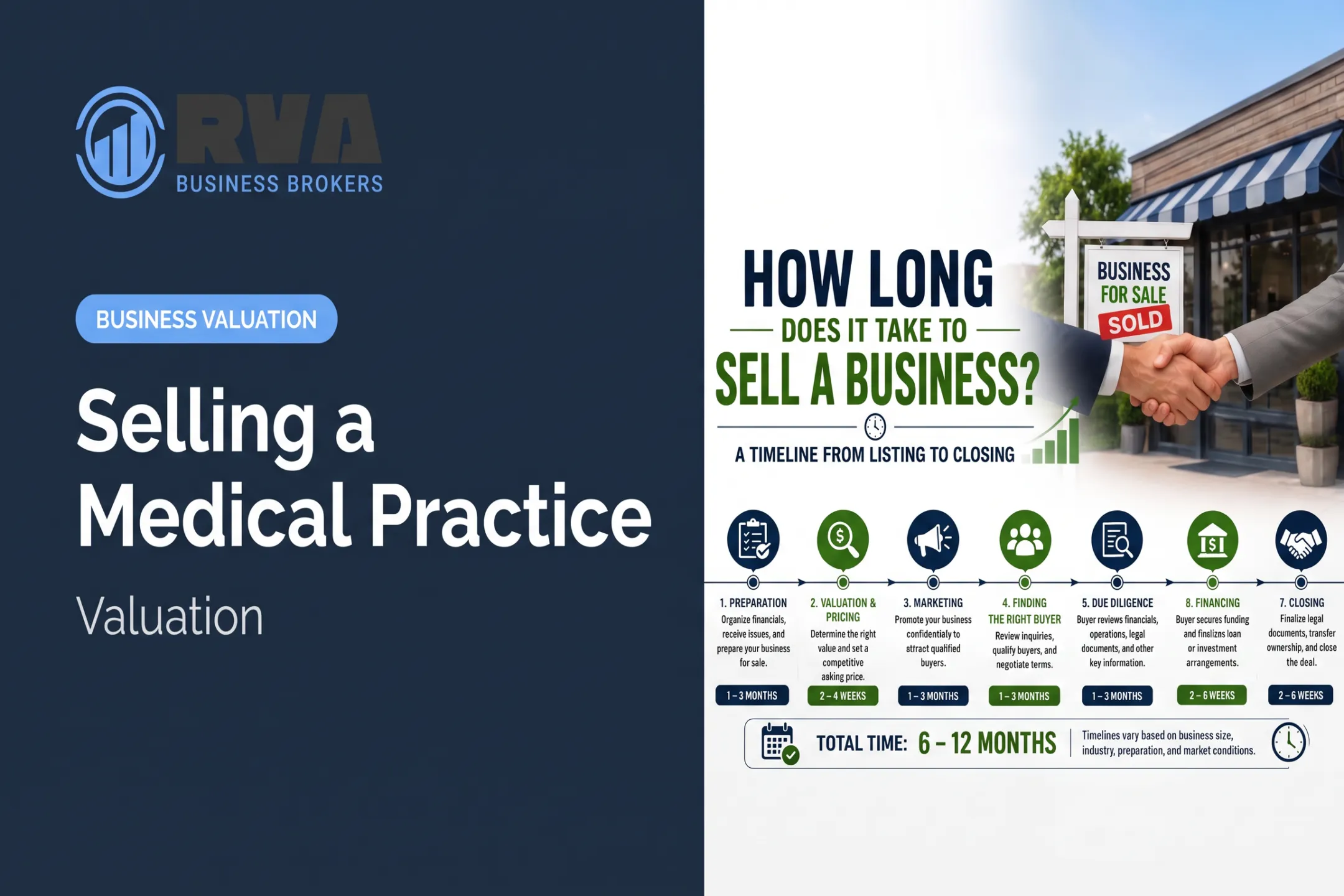
A medical spa sale generally moves through: confidential preparation, valuation, buyer outreach, a letter of intent, confirmatory due diligence, a purchase agreement, financing and third-party consents, closing, and transition. The LOI should pin down major commercial terms while staying subject to diligence and final legal documents. Finding a qualified, serious buyer can take several months alone.

What Buyers Dig Into
Expect diligence requests across areas such as:
- Financial statements, tax returns, and outstanding debts
- Provider, employee, ownership, and licensing files
- Medical-director and supervision arrangements
- Patient-record and privacy procedures
- Equipment ownership and maintenance history
- Insurance, claims, leases, and vendor contracts
- Membership and prepaid-service liabilities
- Marketing claims and compliance support You can assemble much of this internally. Licensing, employment, and patient-privacy items usually need healthcare counsel, accountants, or employment attorneys involved directly. Due diligence typically runs 30 to 90 days, depending on complexity.
Protecting Confidentiality During Diligence
Use a secure data room with need-to-know access, redact sensitive information where appropriate, and document buyer qualifications before sharing anything substantive. Patient-identifying information deserves particular caution. Under federal privacy rules, due diligence related to a sale, transfer, or merger between covered entities falls under permitted "health care operations." That still does not allow casual handoff of patient files. Access still has to follow minimum-necessary standards and your practice's privacy policies. Sell-side brokers commonly gate the data room behind NDAs and written buyer qualification so only serious prospects see sensitive detail.
Negotiation Points That Affect Your Proceeds
Several terms frequently move the final number and the risk you carry after closing:
- Working capital and inventory adjustments
- Assumed liabilities and indemnification scope
- Representations and warranties
- Noncompetition provisions
- Seller financing, escrow, or holdback amounts
- Earn-outs and transition-services requirements Buyers may mix cash at closing, seller financing, earn-outs, rollover equity, and working-capital true-ups—each mix changes your net proceeds and post-close obligations. Review structure with legal and tax advisers before you accept terms.
Closing and the Transition Plan
Once conditions are satisfied, most closings finish within a few weeks. The handoff still needs a written plan covering:
- Lease assignment and license or permit transfers
- Provider, employee, and patient communications
- Vendor accounts, software access, and inventory counts
- Training plus clinical, administrative, and financial ownership Don't sign an LOI or purchase agreement without review from qualified transaction, healthcare, employment, and tax professionals. Deal terms matter as much as headline price, and experienced sell-side guidance helps keep buyer management, diligence, and closing aligned.
Frequently Asked Questions
Is a spa business profitable?
Profitability depends on revenue mix, provider productivity, pricing, payroll, supplies, occupancy, marketing, and recurring memberships. Review normalized financial statements for the specific business rather than relying on industry-wide averages.
How much is a medical spa business worth?
Value is based on sustainable earnings, market evidence, assets, risk, recurring revenue, staff, equipment, lease terms, and compliance standing. Get a professional valuation before setting an asking price.
How long does it take to sell a medical spa?
Timing varies with preparation, buyer qualification, financing, due diligence, and deal complexity. Start planning your exit well before you actually need to leave.
What documents do I need to sell my medical spa?
You'll need financial, tax, employee, provider, license, medical-director, insurance, lease, equipment, vendor, membership, patient-record, and operating documents. Sensitive information should be shared only through controlled, staged disclosure.
How do I sell my medical spa without employees or patients finding out?
Use blind marketing materials, qualify buyers before sharing details, and require signed NDAs. Disclose information in stages through a secure data room, and coordinate communications carefully once a deal is close to final.
What makes selling a medical spa different from selling a regular spa?
Medical spas involve clinical ownership and supervision rules, licensed providers, patient records, treatment liabilities, and regulatory compliance that a standard spa doesn't carry. Healthcare and legal advice is essential, not optional.