
Owners typically worry about the same handful of things: setting a defensible asking price, keeping the sale confidential, finding a buyer who can actually close, maintaining sales during the process, and understanding what the tax and legal fallout looks like.
This guide walks through readiness, valuation, preparation, confidential marketing, negotiation, and the final ownership transition, in that order.
Key Takeaways
- Documented, sustainable cash flow matters more to buyers than gross sales or a gut-feel valuation
- Accurate pricing weighs earnings, add-backs, assets, lease terms, location, and market conditions together
- Organized financial, operational, lease, licensing, and vendor records speed diligence and protect deal momentum
- Confidentiality and buyer screening protect operations while improving odds of a clean closing
Decide Whether Your Restaurant Is Ready to Sell
Your reason for selling shapes everything downstream, including timing, deal terms, and how long you stay involved after closing. Retirement allows for a longer runway. Burnout or an urgent relocation may push you toward a faster, less negotiable process.
Signs you're ready to go to market:
- Financial performance is stable, or any dips are clearly explainable
- Records are organized and current, not scattered across shoeboxes and spreadsheets
- The lease has a workable remaining term with no looming expiration
- Equipment functions properly without constant patchwork repairs
- The business runs without you present every shift
A simple gut check: could the restaurant survive a 30-day vacation without you checking in? If the answer is no, buyers will see that dependence as risk, and risk gets priced into the offer.
Signs you need more preparation first:
- Inconsistent bookkeeping or unreconciled cash deposits
- Unresolved tax issues or pending legal matters
- A lease nearing expiration with no renewal option
- Deferred maintenance on major kitchen equipment
- High staff turnover or unresolved partner obligations
Before listing, compare a full sale against alternatives:
- Retain the real estate and lease it to the buyer separately
- Sell only the business assets
- Bring in a partner to share the load
- Spend a year improving operations first
An accountant, attorney, and business advisor can walk through the tax and legal consequences of each path.
Most owners planning an exit in the next one to five years benefit from starting this conversation two to three years ahead of a listing—not two to three months.
Determine What Your Restaurant Business Is Worth
An accurate asking price starts with a clear valuation. Three approaches typically come into play, and most credible appraisals blend elements of each:
- Income approach - values the business based on sustainable, ongoing earnings
- Market approach - compares your restaurant against similar closed transactions
- Asset approach - values equipment, furnishings, inventory, and leasehold improvements directly
Building the Financial Foundation
Buyers and appraisers will want to see several years of history, not a single snapshot. Gather:
- Profit-and-loss statements and balance sheets (typically three years)
- Tax returns covering the same period
- Point-of-sale reports and current monthly performance
- Debt schedules and payroll records
Understanding Seller's Discretionary Earnings
Most restaurant valuations hinge on Seller's Discretionary Earnings (SDE), not raw tax-return profit. The International Business Brokers Association defines discretionary earnings as pretax earnings plus add-backs: one owner's full compensation and benefits, depreciation, interest, nonrecurring items, and personal expenses run through the business.
That last part trips up a lot of sellers. Add-backs like a personal vehicle lease or a one-time lawsuit settlement are legitimate, but they need documentation. A buyer's lender won't take your word for it.
What Buyers Actually Examine
Beyond the earnings number, buyers dig into:
- Lease rate, remaining term, and renewal options
- Location and concept strength relative to local competition
- Customer concentration and repeat-visit patterns
- Transferable liquor or health licenses
- Equipment condition, recipes, and brand assets (social media following, online reviews)
- Degree of owner dependence in daily operations
Separate three distinct values: the operating business, the equipment, and any owned real estate. Each may need its own analysis, and each gets treated differently in the purchase agreement.
Reported benchmarks: BizBuySell's full-year 2025 transaction data shows a $225,000 median restaurant sale price and a 2.26 average cash-flow multiple. These are reported closed-sale figures, not a formula to apply blindly. Multiples swing based on concept, geography, financial clarity, and deal structure.
Those swings are why a defensible number comes from your books, not a rule of thumb. Mid Atlantic Business Brokers builds restaurant valuations with asset-based, income-based, and market-based approaches under USPAP and NACVA standards. The process stays confidential and data-driven. We don't promise a specific sale price upfront. Nobody credible does.

Prepare the Restaurant for Market
Clean books win deals. Before you list, normalize your financials: separate personal and business expenses, reconcile deposits against POS reports, and be ready to explain any unusual revenue swings or one-off costs.
Build a Seller-Readiness File
Assemble documentation covering:
- Tax returns and year-end financial statements
- POS sales reports, payroll, and employee records
- Vendor agreements and insurance records
- Licenses, permits, and health inspection history
- Equipment lists with maintenance records
- Outstanding liabilities, loans, and liens
Review Your Lease Line by Line
The lease often makes or breaks a restaurant sale. Review it line by line for:
- Remaining term and renewal options
- Rent escalation clauses
- Assignment and transfer provisions
- Landlord consent requirements
- Personal guarantees you have signed
- Exclusivity clauses that could restrict a buyer's concept
Clear the Path on Alcohol Licenses
Alcohol licenses need equal attention. In many states, a change in ownership terminates the existing license, so the buyer must apply fresh. Some states offer a temporary continuation permit during that process, but it is not automatic and usually needs the outgoing licensee's cooperation.
Polish Operations Without Overspending
You don't need a remodel to sell. Focus on:
- Repairing or removing non-functioning equipment
- Addressing visible deferred maintenance
- Cleaning and organizing storage areas
- Removing personal items from the space
- Running the restaurant consistently—not quietly winding down
Document what makes the business transferable:
- Recipes and prep methods
- Supplier contacts
- Opening and closing checklists
- Staff responsibilities
- Technology logins
A business that depends entirely on you is harder to sell and often sells for less. Assign responsibilities and stabilize staffing before you go to market.
Loop in your accountant and attorney early on entity structure, asset-versus-stock sale treatment, and purchase price allocation. A business broker can help package these materials, pressure-test readiness, and keep the sale confidential until you are ready to list.

Market the Restaurant Confidentially and Find Qualified Buyers
An unplanned leak that you're selling can spook employees, rattle regular customers, and give competitors an opening. Confidentiality isn't optional. It has to shape every step of how you take the restaurant to market.
A Staged Disclosure Process
- Market with a neutral description and no business name attached
- Require a signed NDA before releasing any identifying details
- Prequalify buyers financially before sharing deeper information
- Release sensitive financial and operational data only as serious interest builds
BizBuySell's confidentiality guidance follows the same sequence: advertise without identifying details, collect an NDA first, and screen financial background before any on-site meeting.
Choosing a Sales Channel
| Channel | Confidentiality | Buyer Reach |
|---|---|---|
| Specialized broker | High | Broad, vetted |
| Industry contacts | High | Narrow |
| Online marketplaces | Low | Broad, unscreened |
| Strategic operators | Moderate | Targeted |
If you're evaluating a broker, look for:
- Restaurant transaction experience
- A documented marketing plan and real buyer network
- Clear confidentiality procedures
- References and transparent fees
Mid Atlantic Business Brokers runs confidential marketing and buyer sourcing, makes lender introductions and vetted professional referrals, then helps compare offers and coordinate diligence through closing.
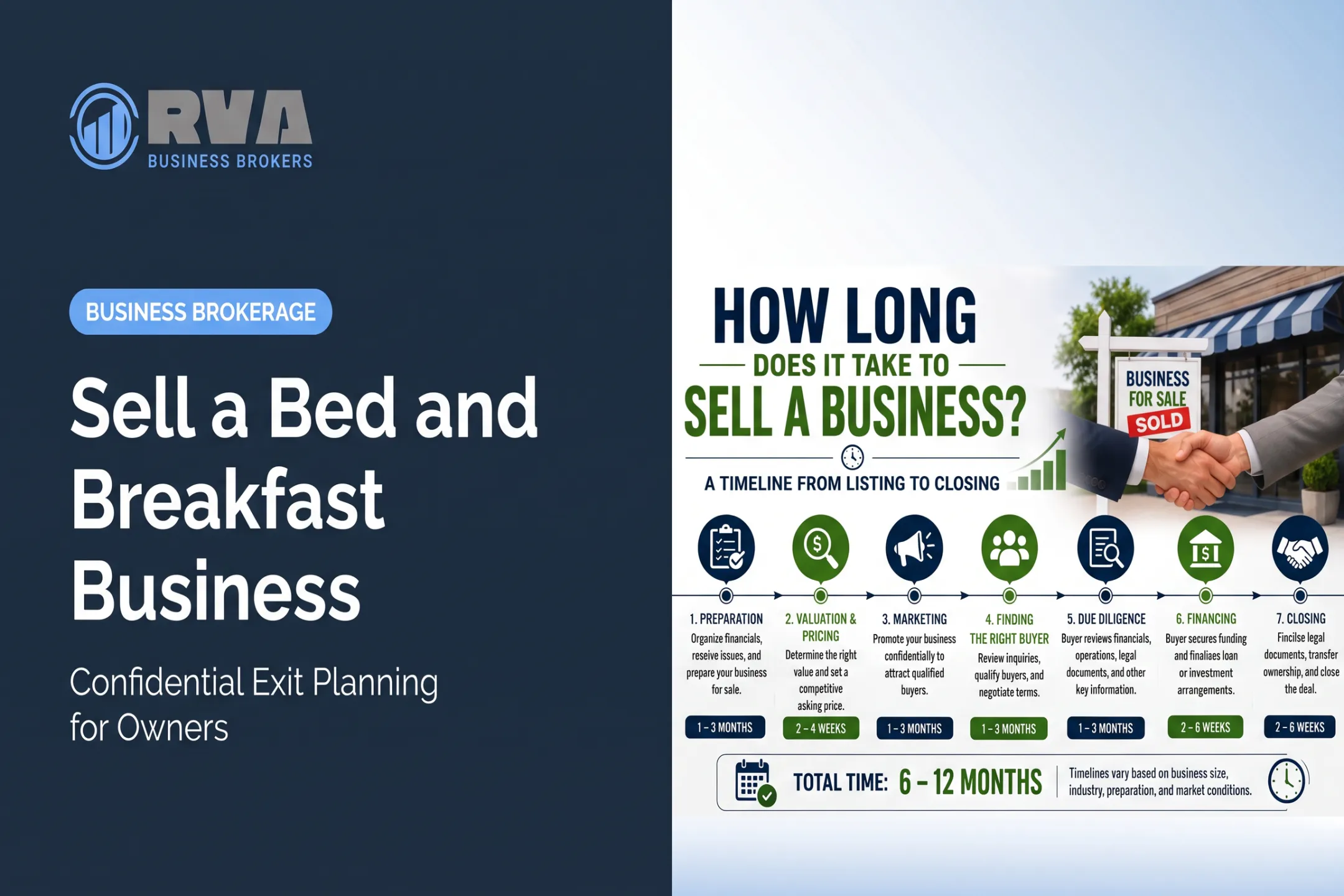
How Long the Sale Usually Takes
Channel choice affects who sees the deal; timing still depends on pricing, financial clarity, buyer readiness, financing approval, and landlord cooperation. BizBuySell's 2025 data puts the median time to close for restaurants at roughly 189 days, longer than the overall business-for-sale average.

Strong financials and a desirable concept can draw inquiries within weeks. Specialized concepts or higher price points often take longer to reach a qualified buyer and a signed close.
Negotiate, Complete Due Diligence, and Transfer Ownership
Once offers arrive, treat headline price as only one piece of the deal. Evaluate structure and risk just as closely:
- Cash at closing versus seller financing or an earnout
- Contingencies and inventory treatment
- Assumed liabilities and lease assignment terms
- Training obligations and noncompete provisions
- The buyer's actual ability to secure financing
Due Diligence From the Seller's Side
Expect this phase to run 30 to 90 days. Buyers will review financial records, tax returns, contracts, leases, licenses, and operating procedures in detail. As the seller, focus on:
- Provide consistent, documented financial information
- Verify asset ownership and resolve any liens
- Confirm licenses and permits are current
- Explain add-backs with receipts, not assurances
- Support the landlord's review of the lease assignment
- Respond promptly without disrupting daily operations
Vet the buyer just as carefully. Review proof of funds, financing status, relevant operating experience, and references, while staying within reasonable privacy boundaries.
Keep operations steady throughout. Strong diligence answers mean little if the restaurant slips while you negotiate. Maintain staffing, customer service, inventory controls, and vendor relationships right up to closing—a mid-deal dip can kill momentum or force a price cut.
Closing and the Handoff
When diligence holds and terms are set, the purchase agreement should clearly define included and excluded assets, liabilities, representations, indemnities, payment terms, and post-closing obligations. Practical transition items include:
- Inventory count and bill of sale execution
- Keys, alarm codes, and password transfers
- Social media and website account access
- Recipe documentation and vendor contact handoff
- Employee communication and training support
- Transfer of approved licenses and existing contracts
Loop in your attorney and tax professional before signing anything, and lean on an experienced business broker to keep negotiation, lender connections, and closing conditions aligned.
Most closings wrap up within a few weeks once conditions are met. SBA or traditional financing can still add several weeks to the timeline.

Frequently Asked Questions
How do you calculate the value of a restaurant business?
Valuation typically weighs sustainable earnings, documented add-backs, comparable transactions, assets, lease terms, and market conditions together. A professional valuation gives you a defensible asking price rather than a guess.
What is the most effective way to sell a restaurant?
Accurate pricing, organized records, confidential marketing, and qualified-buyer screening form the foundation. Experienced guidance through negotiation and closing helps avoid costly missteps.
How can I sell my restaurant quickly?
Realistic pricing, complete documentation, a transferable lease, and prompt responses to buyer inquiries reduce avoidable delays. That said, no broker or advisor can guarantee a fast sale.
How profitable is a restaurant business?
Profitability varies by concept, food and labor costs, and location. National Restaurant Association 2025 data puts 2024 median pretax income at 2.8% of sales for full-service and 4.0% for limited-service. Use your documented cash flow, not averages alone.
Is it hard to sell a franchise?
Franchise resales usually require franchisor approval, a transfer fee, and review of the franchise agreement, plus buyer training and qualification. Review your franchise documents with the franchisor and qualified professionals before listing.