
The results you achieve depend heavily on your company’s unique situation. Factors like clean financial records, how much the business relies on you, industry trends, recurring revenue, and the quality of your contracts all play a role. A successful sale requires a strategic approach that navigates these variables to maximize your return.
This guide walks you through the complete process of selling a business in Maryland. We'll cover when to start preparing, how to value and market your company, what Maryland-specific issues to anticipate, and the common mistakes to avoid.
Key Takeaways
- A successful Maryland business sale begins months, or even years, before the business is listed, with clean financials and a realistic valuation.
- Confidential marketing is critical; it should always involve a blind teaser, a non-disclosure agreement (NDA), and thorough buyer qualification.
- Asset sales and stock sales have different tax and liability outcomes; have advisors model both alternatives to see what works best for you.
- The strongest offer isn’t always the highest price. Consider financing, earnouts, and post-closing risks when evaluating proposals.
- Confirm current Maryland tax, licensing, and transfer requirements with qualified professionals before signing any definitive agreements.
How to Sell a Business in Maryland
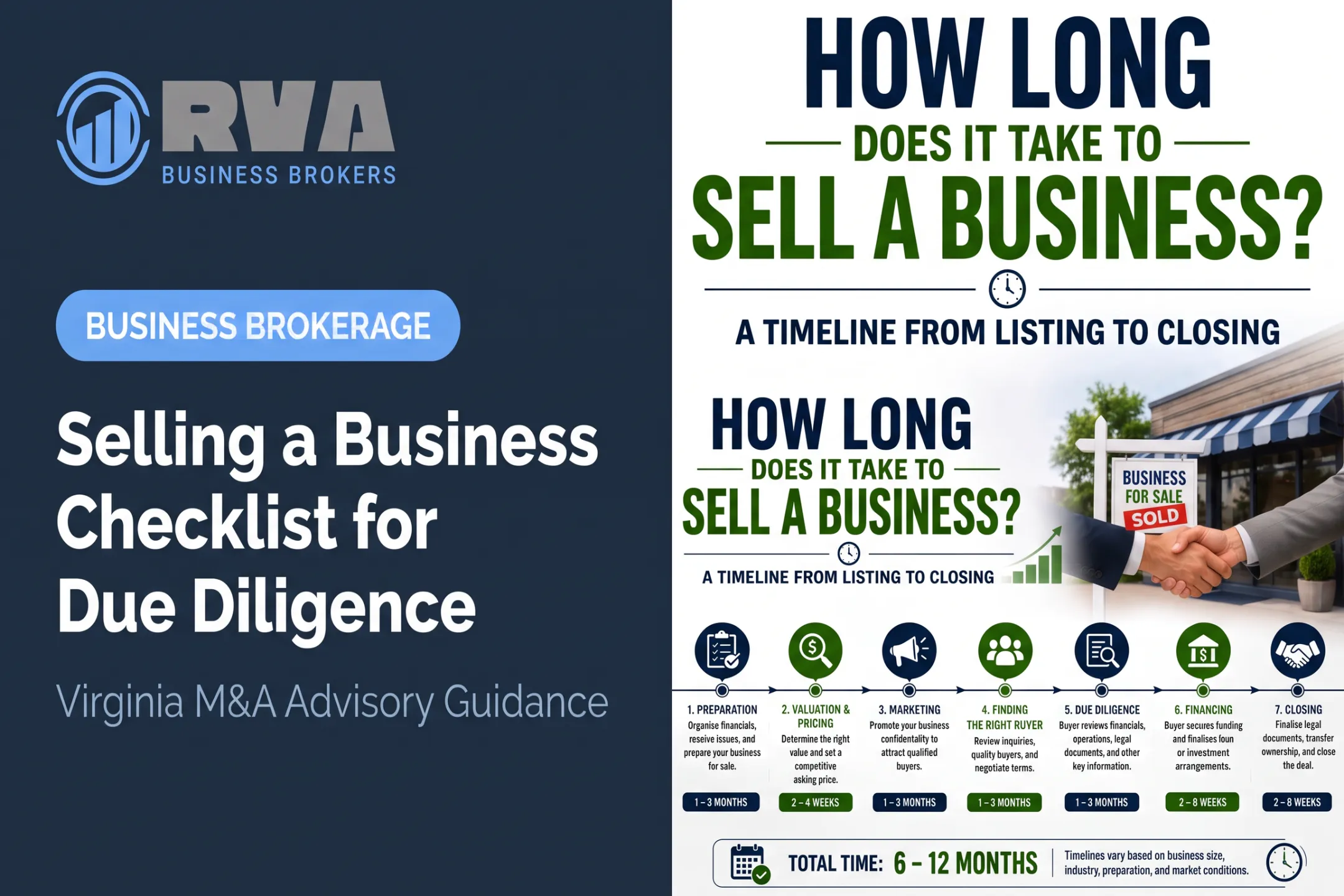
Selling a business in Maryland is a structured process that usually unfolds over months, not a single event. A clear sequence of steps helps you protect confidentiality, attract qualified buyers, and reach a clean closing. Most sales take 6 to 12 months from start to finish, depending on readiness and complexity.
Step 1: Decide Your Goals and Target Timeline
Before you do anything else, define what a successful exit looks like for you. Clarify your reason for selling, your target closing date, and the minimum proceeds you will accept.
Also decide how involved you want to be after closing. Seller financing, an earnout, or a transition period can all shape the deal and the buyer pool.
Owners planning to sell within the next one to five years should start preparing now. A longer runway gives you time to improve profitability, reduce owner dependence, resolve disputes, and secure transferable contracts and Maryland licenses or permits. Those steps can raise what buyers will pay.
Your initial team should include a business broker, a transaction-focused CPA, and an M&A attorney familiar with Maryland deal structure and closing requirements.
Step 2: Prepare and Value the Business
Buyers underwrite future performance, but they verify it against your historical results. Start by assembling at least three years of financial statements and tax returns.
Reconcile revenue, expenses, and any personal costs run through the business so a buyer can see true profitability. This normalization process adjusts for one-time costs and owner-specific compensation to produce a clear earnings picture.
A formal valuation may use several methods:
- Asset-based: Values the company's tangible and intangible assets
- Income-based: Converts anticipated future earnings or cash flow into a present value
- Market-based: Compares your business to similar companies that have recently sold
The final valuation is supported by financial performance, industry conditions, and your company's transferability. Factors like recurring revenue, customer concentration, profit margins, and owner involvement all directly impact what a buyer is willing to pay.
At Mid Atlantic Business Brokers, we provide confidential, data-driven valuation and exit-planning guidance. Our Certified Business Appraisers use methodologies aligned with USPAP and NACVA standards to give you a defensible and realistic understanding of your business's worth.
Step 3: Create a Confidential Marketing and Buyer-Screening Process
Protecting your company's identity is essential. A confidentiality breach can damage employee morale, spook customers, and alert competitors. Run the process in stages:
- Anonymous Teaser: A "blind" profile is created that describes the business type, general location, and financial highlights without revealing its name.
- NDA and Qualification: Prospective buyers must sign a non-disclosure agreement (NDA) and prove they have the financial capacity and relevant experience to complete a transaction.
- Confidential Information Memorandum (CIM): Qualified buyers receive a detailed book on the business that outlines its operations, financials, and growth opportunities.
The right buyer could be a strategic acquirer in your industry, an individual entrepreneur, a private investment group, or even a competitor. A targeted marketing process ensures you only engage with serious, capable prospects.
Step 4: Manage Offers, Diligence, and Closing
After reviewing the CIM, interested buyers will ask questions and may submit an indication of interest (IOI) or a more formal letter of intent (LOI). An accepted LOI typically grants the buyer an exclusivity period to conduct due diligence, which can take 30 to 90 days.

During this phase, expect negotiations on key points:
- Purchase price and structure (asset vs. equity)
- Working capital and inventory treatment
- Seller financing, earnouts, or escrow
- Representations, warranties, and indemnification
- Non-compete terms and transition support
Your attorney and tax advisor must review the definitive purchase agreement to protect your interests. Once diligence is complete and financing is secured, you can close.
Closing transfers assets, intellectual property, leases, Maryland permits or licenses where required, and operational control to the new owner.
What You Need Before Selling a Business in Maryland
Thorough preparation directly impacts buyer confidence, your negotiating leverage, and your final net proceeds. Before going to market, you need to honestly assess if your business is ready for a sale or if you should spend more time getting your house in order.
When Should You Start Preparing?
Ideally, preparation begins 1-3 years before your target sale date. This gives you time to address weaknesses that could lower your valuation or derail a deal. Businesses with messy records, heavy owner dependence, unresolved legal issues, or expiring contracts often need a longer runway.
Use this practical readiness checklist to see where you stand:
- Financials: Are your P&L statements, balance sheets, and tax returns clean and up-to-date for the last three years?
- Corporate Records: Are your articles of incorporation, bylaws, and ownership documents organized?
- Contracts: Are key customer and vendor agreements transferable?
- Leases: Is your property lease assignable to a new owner?
- Permits & Licenses: Are all necessary business and professional licenses current and transferable?
- Employees: Are employment records, contracts, and key roles documented?
- Intellectual Property: Is your ownership of trademarks, patents, and domain names clear?
- Legal: Are there any pending lawsuits or claims?
Financial and Operational Requirements
During due diligence, buyers will request extensive documentation to verify your claims. Be prepared to provide:
- Financial statements (P&L, balance sheets, cash flow)
- Federal and state tax returns (3-5 years)
- Bank statements
- Detailed customer and vendor lists
- Payroll records and employee information
- A complete list of assets and debt schedules
- Explanations for any unusual revenue spikes or one-time expenses
Just as important is operational readiness. Can the business run without you for 30 days? A business that is not dependent on its owner is more valuable and easier to sell.
Factors that reduce buyer risk and improve transferability include:
- Documented processes and procedures
- A capable management team beyond the owner
- Low customer concentration
- Recurring or contracted revenue
Maryland Legal, Tax, and Transfer Checks
Selling a business in Maryland involves several state-specific compliance steps. Review these key areas with your professional advisors:
- Sales and Use Tax: The sale of taxable business assets may trigger Maryland sales and use tax. After the sale, you must file a final return and close your account using Form 202FR with the Comptroller of Maryland.
- Real Property Taxes: If your business owns real estate, or if you are transferring a controlling interest in an entity that holds Maryland real property, state and county transfer and recordation taxes may apply.
- Vehicle Transfers: For any company-owned vehicles included in an asset sale, titles must be properly signed over to the buyer, and any liens must be released.
- Good Standing: Your business entity must be in "good standing" with the Maryland Department of Assessments and Taxation (SDAT). This confirms you have filed all annual reports and paid relevant personal property taxes.
- Licenses and Permits: The transferability of professional and business licenses varies. For example, the Maryland Home Improvement Commission has a specific process for a change of control, but other licenses may require the new owner to apply independently.
Disclaimer: Tax and legal outcomes are highly specific to your business entity, transaction structure, and local requirements. Always consult with Maryland-qualified legal and tax professionals before making any decisions.

Key Factors That Affect the Sale of a Maryland Business
The "price" of a business is not a single number. Separate the initial valuation, asking price, and negotiated purchase price from your final after-tax proceeds. Several key factors influence all of these figures.
Financial Performance and Valuation Evidence
Strong, consistent financial performance is the bedrock of a high valuation. Buyers scrutinize revenue quality, profitability, cash flow, and growth trends. According to the Q2 2026 Market Pulse report from the IBBA, buyers are particularly sensitive to margins and operating risk.
Businesses with high-quality earnings, such as recurring or contracted revenue, diverse customer bases, and stable profit margins, command higher multiples because they represent lower risk.
Deal Structure: Asset Sale vs. Stock Sale
The way a deal is structured shapes taxes, liabilities, and contract transfers.
- Asset Sale: The buyer purchases specific assets (and may assume selected liabilities); your selling entity remains with you. Buyers often prefer it for a stepped-up asset basis and less exposure to past liabilities.
- Stock (or Membership-Interest) Sale: The buyer purchases the ownership shares or membership interests. The same legal entity continues with its assets, liabilities, and contracts. Sellers often prefer it for potential long-term capital gains treatment.
The choice between these structures affects everything from purchase price allocation and tax treatment to whether you need third-party consent to assign contracts. It's a critical negotiation point that should be modeled by your CPA and attorney.
Transferability and Buyer Risk
If a business is hard to transfer, it is hard to sell. Anything that raises a buyer's perceived risk can mean lower offers, large escrow demands, or a failed deal. Common risk factors include:
- Owner Dependence: The business relies too heavily on the owner's personal relationships or skills.
- Contract Issues: Key customer or supplier contracts are not transferable upon a change of control.
- Licensing & Permits: Essential licenses cannot be easily transferred to a new owner.
- Employee Retention: Risk of key employees leaving after the sale.
- Unresolved Issues: Lingering litigation, environmental concerns, or regulatory compliance problems.
Inadequate preparation or messy records that surface during due diligence can cause buyers to demand price reductions or change deal terms, as noted by M&A Source advisors.
Terms Beyond the Headline Price
The highest offer on paper may not put the most cash in your pocket. You must evaluate the entire deal structure to understand its true value and certainty.
For example, compare two hypothetical offers for a $3 million business:
- Offer A: $3.2 Million Price. $2.2 million cash at closing, a $500,000 seller note over five years, and a $500,000 earnout tied to future performance.
- Offer B: $3.0 Million Price. This is an all-cash offer at closing with no seller financing or contingencies.
While Offer A has a higher headline price, Offer B provides more certainty and immediate liquidity. Offer A exposes you to the credit risk of the buyer (for the note) and the risk that the business underperforms (for the earnout). The best offer balances price with certainty.

Common Mistakes, Troubleshooting, and Alternatives
Preventable seller mistakes sink more Maryland business sales than a shortage of interested buyers. Fix valuation, records, and transfer issues before you go to market.
Common Mistakes to Avoid
- Lack of preparation: Going to market without a defensible valuation, clean financials, or a clear reason for selling
- Breaching confidentiality: Naming the company too early or sharing sensitive data without a signed NDA from a qualified buyer
- Ignoring transferability: Overlooking owner dependence, contract assignment clauses, Maryland license or permit transfers, or open legal disputes
- Focusing only on price: Ignoring how seller financing, earnouts, and transition duties change your net proceeds
Troubleshooting Common Deal Problems
- Buyers go silent: Re-check asking price, financial clarity, and buyer qualification—unrealistic pricing or muddy numbers push serious prospects away
- Diligence drives a price cut: Separate fixable documentation gaps from real business risk, quantify the exposure, then fix, disclose, or renegotiate with your advisors
- Buyer wants complex terms: For heavy seller financing, large earnouts, or long transitions, vet creditworthiness, your post-closing control, and escrow release conditions
Alternatives to a Conventional Brokered Sale
A broad marketing process isn't right for every business. Depending on your goals, you might consider:
- Internal succession: Sell to a key employee or management team (management buyout)
- Family transfer: Transition ownership to the next generation
- Strategic sale: Approach one specific strategic buyer directly
- Merger: Combine with another company
- Orderly wind-down: Liquidate assets and close if a sale is not feasible
Each path trades off speed, confidentiality, price potential, and complexity. Match the route to your timeline and net-proceeds target, then structure it with qualified deal advisors before you commit.

Your Partner for a Successful Maryland Business Sale
Selling your business in Maryland works best when you prepare early, understand your company’s defensible value, and protect confidentiality throughout the process. Success means evaluating the full economic value of each offer, not just the headline price.
A strong sale balances several moving parts:
- Financial readiness before you go to market
- Maryland-specific legal and tax diligence
- Access to qualified buyers
- Skilled negotiation on price and terms
If you are considering a sale now or within the next few years, start with a clear, objective view of what the business is worth.
Contact Mid Atlantic Business Brokers to schedule a confidential valuation and readiness review. Our brokers and Certified Business Appraisers guide sellers through valuation, marketing, negotiation, and closing while keeping the process confidential.
Frequently Asked Questions
What is the fastest way to sell a business in Maryland?
Speed depends on readiness. Clean financials, a realistic valuation, and strong buyer demand shorten the timeline. A confidential, professionally managed process can cut delays—without skipping buyer qualification or deal quality.
Where is the best place to sell a business in Maryland?
The best channel depends on size, industry, and confidentiality needs. A confidential broker-led process usually reaches the widest pool of qualified buyers; targeted outreach can fit a niche strategic sale. Online marketplaces often lack confidentiality and draw weaker inquiries.
How are LLCs taxed in Maryland?
LLC taxation in Maryland depends on the company's federal tax classification (disregarded entity, partnership, S-Corp, or C-Corp) and the transaction structure. A sale's tax implications are highly specific, so you should always consult a qualified CPA for analysis.
How long does it take to sell a business in Maryland?
Most sales take 6 to 12 months: preparation (1–3 months), marketing and buyer selection (3–6 months), and due diligence and closing (2–3 months). Complex or unprepared businesses often take longer.
How much is my business worth in Maryland?
Value depends on normalized earnings, cash flow, assets, industry, and growth potential. Transferability factors like owner involvement and customer concentration also matter. A professional valuation is the only reliable way to pin down a figure.
Should I sell the assets or the ownership interest in my Maryland business?
This choice has major tax and liability consequences. Buyers often prefer asset sales to limit liability and improve tax treatment; sellers often prefer selling the ownership interest for simpler taxes. Model both paths with your legal and tax advisors.