
Introduction
Preparing a business for sale means strengthening its finances, operations, legal standing, and strategy before confidentially presenting it to qualified buyers. It's a process, not a single event.
This guide is written for U.S. business owners weighing retirement, a career change, or a sale within the next few years. It covers owner-operated companies and lower middle-market firms generating $1 million to $50 million in revenue.
Early preparation matters because buyers look past the top-line revenue number. They scrutinize cash flow quality, customer concentration, owner dependence, and legal exposure. Unresolved issues in any of these areas can reduce valuation, slow negotiations, or kill a deal entirely.
Here's what we'll cover:
- Setting personal and transaction goals
- Getting an objective valuation
- Cleaning up your records
- Reducing owner dependence
- Assembling your advisory team
- Managing the sale process through closing
Key Takeaways
- Start preparing well before you list so you can close financial, operational, and legal gaps
- Define your personal and financial goals before choosing a buyer or deal structure
- Get an objective valuation that weighs cash flow, risk, growth, and owner dependence
- Keep the sale confidential and the business performing from marketing through diligence and close
What Preparing a Business for Sale Involves
Preparation is the work that makes your company easier for a buyer to understand, finance, and run after you exit. It's distinct from the sale itself.
The sale transaction (marketing, buyer review, negotiation, legal documentation, financing, and closing) comes later. Preparation is what makes that transaction smoother and more likely to close on favorable terms.
Done well, preparation delivers:
- A credible, defensible valuation backed by real data
- Stronger buyer confidence during due diligence
- Fewer last-minute surprises that stall or kill deals
- Deal terms that actually reflect your priorities, not just the buyer's
How Preparation Differs by Business and Exit Path
Not every seller prepares the same way. A local HVAC company with $3 million in revenue doesn't need the same documentation as a $15 million manufacturer with multiple facilities.
Preparation also shifts based on your exit path:
- A strategic sale to a competitor or industry buyer often requires detailed customer and contract documentation
- A financial buyer (private equity or an individual investor) typically wants normalized EBITDA and management depth
- An internal management buyout may rely more on financing structure than external marketing
- A family transfer often prioritizes tax planning and governance over buyer sourcing
- Regulated sectors (healthcare, home and community-based services, disability support providers) may require license transfers, payer-contract reassignment, or new provider enrollment before closing
Why Preparation Matters and What Buyers Evaluate
Selling from a position of preparation gives you more control. You choose the timing, vet the buyers, and respond to diligence findings from strength rather than urgency.
Owners who wait until they're forced to sell (health, burnout, or financial pressure) usually accept worse terms.
Buyers typically pressure-test four areas before they commit:
- Financial quality and earnings durability
- Customer, market, and commercial strength
- Operational independence and continuity
- Legal, tax, and compliance exposure
Financial Quality and Value Drivers
Buyers want to see revenue and profit trends that hold up, not a single good year. They'll look at:
- Normalized earnings (SDE or adjusted EBITDA), with owner pay and one-time expenses added back
- Working capital needs and outstanding debt
- Recurring or repeat revenue, which typically signals lower risk
- Consistency and quality of financial reporting over time
Customer, Market, and Commercial Strength
Customer concentration is one of the first things a buyer checks. If one client represents a huge share of revenue, that's a red flag — losing them after closing could gut the business. Buyers also weigh:
- Customer retention rates and contract terms
- Dependence on a small number of suppliers
- Competitive differentiation and market position
- Whether customer relationships are transferable to a new owner
Operational Independence and Continuity
Can the business run without you? Buyers test this constantly. They want documented procedures, a capable management layer, and systems that don't live only in your head.
Key areas buyers probe:
- Standard operating procedures for core workflows
- Management depth and succession capability
- Employee retention and compensation structure
- Licenses, permits, and technology systems
Legal, Tax, and Compliance Exposure
Unresolved legal or tax issues rarely kill deals outright, but they create delays, indemnities, price reductions, or escrow holdbacks.
In regulated industries such as home health and IDD disability-support services, state licenses are often non-transferable. A buyer may need new provider enrollment before billing Medicaid—a process that can take weeks and should start well before closing.
Preparation still pays off if you delay or decide not to sell. Cleaner reporting, tighter operations, and less owner dependence improve optionality and the terms you can defend in diligence.

Step-by-Step Preparation and Sale Roadmap
Step 1: Clarify Your Reason for Selling
Your motivation shapes everything downstream — timeline, deal structure, and buyer type.
Retirement, health concerns, burnout, a new opportunity, or a partnership change all point toward different preferred outcomes. Before going further, prioritize:
- Price versus speed
- Confidentiality requirements
- Employee continuity and legacy
- Buyer type (strategic, financial, internal)
- Whether you'll stay on post-closing, and for how long
- Tax-efficient structuring of proceeds
Step 2: Start Early and Build an Exit-Readiness Plan
Exit planning typically spans three to five years from the time an owner begins preparing to the actual sale, according to the Exit Planning Institute. Treat that as a planning horizon. Your actual timeline depends on the company's condition, complexity, and how urgently you need to exit.
A written plan should cover:
- Financial cleanup — addressing bookkeeping gaps and unclear add-backs
- Operational improvements — reducing owner dependence
- Advisor engagement — bringing in a broker, CPA, and attorney early
- Post-sale planning — knowing what you'll do with proceeds and your time
Step 3: Get an Objective Valuation
There's no single formula that values every business. Professional standards from the National Association of Certified Valuators and Analysts recognize three core approaches, and caution that rule-of-thumb multiples should not stand alone:
| Approach | What It Measures |
|---|---|
| Income | Converts expected future earnings into a present value |
| Market | Compares your business to similar companies that have sold |
| Asset | Values assets net of liabilities |
A credible valuation reviews your financial statements, tax returns, cash flow, customer concentration, industry trends, and owner dependence together — not in isolation.
At Mid Atlantic Business Brokers, valuations combine asset-based, income-based, and market-based methods, with methodologies grounded in USPAP and NACVA standards where applicable. The process stays confidential and data-driven so you have a defensible number before you go to market.
Step 4: Clean Up Financial, Tax, and Business Records
Buyers request a predictable set of documents. Get ahead of it:
- Three years of financial statements and tax returns
- General ledgers, bank records, and debt schedules
- Payroll records, inventory counts, and AR/AP aging
- Budgets, forecasts, and explanations for unusual items
Normalized earnings—add-backs for owner pay, personal expenses run through the business, and one-time costs—must be supportable, not aspirational. Work with your CPA before you show these numbers to a buyer.
Commingled personal expenses, missing filings, and unclear asset ownership are among the most common reasons diligence drags on.
Step 5: Reduce Owner Dependence and Document Operations
Here's a simple test: could your business run smoothly if you took a 30-day vacation with no phone calls? If the honest answer is no, buyers will notice.
Document these areas before marketing:
- Standard operating procedures for core processes
- Role descriptions and approval authority
- Customer and vendor relationship details
- Licenses, permits, leases, and compliance records
Delegating decisions and building management depth demonstrates continuity. It's often the single biggest lever for improving both valuation and buyer confidence.
Step 6: Assemble Your Advisory Team and Manage the Transaction
Build a small team with clear roles: a business broker or M&A advisor, a transaction attorney, a CPA, and often a wealth advisor for post-sale planning.
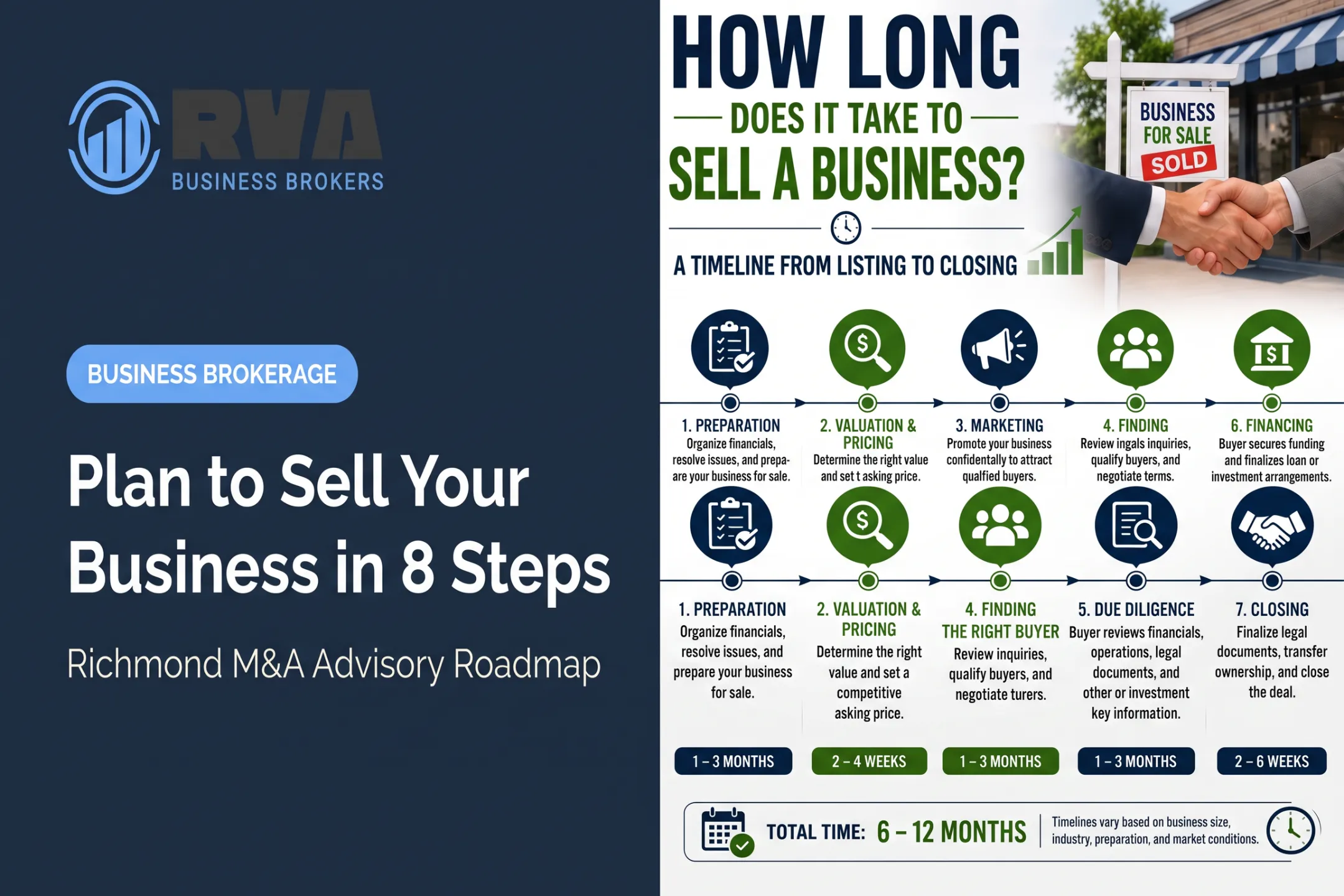
The typical transaction flow:
- Confidential preparation and marketing (teaser, then detailed materials under NDA)
- Buyer qualification and indications of interest
- Management meetings and letters of intent
- Confirmatory due diligence and financing
- Purchase agreement, closing, and transition

Mid Atlantic Business Brokers supports sellers through confidential marketing, qualified-buyer sourcing, negotiation, deal structuring, and closing. The firm can also connect owners with SBA 7(a) and other lenders. It does not promise a specific price or timeline, because every deal is different.
Readiness Factors, Common Mistakes, and When to Wait
Readiness checklist: Before you list, confirm you have:
- Reliable, three-year financial records
- A defensible, professionally supported valuation
- Documented operations and reduced owner dependence
- Diversified customers and suppliers
- Transferable contracts and licenses
- Resolved legal or tax concerns
- Clear personal objectives
Even a solid business can stall in market if the sale process goes sideways.
Common mistakes that derail deals:
- Guessing a price based on a competitor's sale
- Waiting until an urgent exit is forced
- Hiding known problems instead of disclosing them
- Letting performance slip during the sale process
- Signing a letter of intent without legal review
Diligence failures are more common than most owners expect. In Axial's 2025 dead deal report on 75 transactions, non-financial diligence findings drove 25.3% of failed deals. Earnings discrepancies accounted for another 21.3%. Clean books and honest disclosure cut that risk directly.

Sometimes waiting makes sense. Postpone the listing if:
- Financial records aren't reliable yet
- Performance is declining for fixable reasons
- Key licenses or contracts won't transfer
- Expected proceeds fall short of your personal needs
Owners who aren't ready can still request a readiness assessment, benchmark current value, and build a multi-year improvement plan. Legal, tax, and financial advice specific to your situation should come from qualified professionals in those fields.
Conclusion
Preparing a business for sale means improving the company, clarifying your goals, proving the financial story, and reducing buyer risk before you ever go to market. Valuation, clean records, operational independence, and a qualified advisory team work together as one process.
If you're considering a sale in the next several years, start with a confidential readiness and valuation discussion. Mid Atlantic Business Brokers offers that starting point for owners across Virginia, Washington D.C., Maryland, the Carolinas, Georgia and Florida who are preparing to sell.
Frequently Asked Questions
How do I prepare a business for sale?
Start early, clarify your goals, and get an objective valuation. Clean up financial and legal records, reduce owner dependence, document operations, and assemble a qualified advisory team before marketing confidentially.
What is the formula for valuing a business to sell?
There's no universal formula. Valuation typically combines income, market, and asset approaches, factoring in cash flow, liabilities, comparable sales, growth, and risk.
How hard is it to sell a company?
Difficulty depends on your financial health, documentation, industry, and buyer demand. Preparation and experienced advisors improve your odds of a smooth, successful close.