
Introduction
Selling a company is rarely as simple as naming a price and signing a contract. It is a financial and operational decision that often carries real emotional weight—all at the same time.
Owners typically wrestle with the same questions:
- Is now the right time?
- What is the business worth?
- How do I keep this quiet from employees and competitors?
- Which buyer will close, not just make an offer?
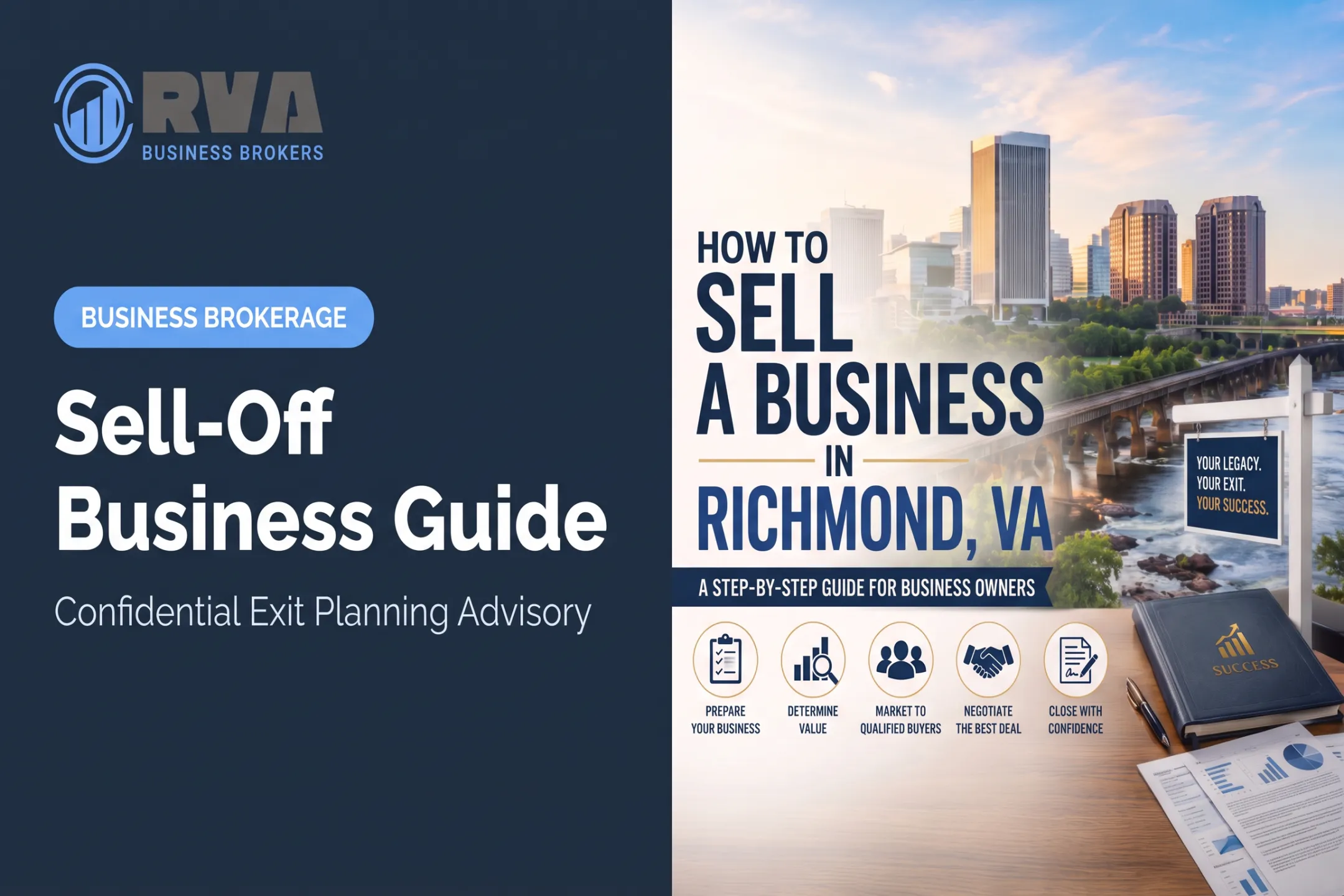
This guide walks through exit planning, value improvement, valuation methods, buyer selection, negotiation, due diligence, and the handoff itself. Each stage carries its own risks, and skipping one usually costs you money or time later.
Key Takeaways
- Start exit planning one to three years before your target sale date, not the month you decide to list
- Build a defensible valuation using financial performance, market comparables, and transferable earnings, not a hoped-for number
- Protect sensitive data through staged disclosures, NDAs, and buyer screening before sharing financials
- Judge offers on total consideration, payment certainty, and transition terms, not just the headline price
Decide Whether It Is the Right Time to Sell
Owners sell for a lot of reasons, and most aren't purely financial.
Common triggers include:
- Retirement or a desire to slow down
- Burnout after years of running day-to-day operations
- Health issues or family circumstances
- A new business opportunity pulling attention elsewhere
- Partnership disputes or misaligned co-owner goals
- A need for capital that the business itself can't provide
Retirement dominates the data. In the IBBA/M&A Source Q2 2026 Market Pulse survey, retirement accounted for 72% of reported sales in the $1M–$2M revenue segment, and led every transaction-size bracket surveyed.

Burnout and health concerns showed up more often at the smaller end of the market.
Personal Readiness vs. Business Readiness
Wanting to sell and being ready to sell aren't the same thing. A useful gut check: could the business run smoothly if you disappeared for 30 days? If the answer is no, that's a red flag buyers will notice too.
Before going to market, review:
- Profitability and revenue trends over the last three to five years
- Customer stability and concentration risk
- Management depth beyond the owner
- Owner dependence in day-to-day operations
Owners one to three years from a potential exit should get an initial valuation and exit-readiness review now. That window gives enough runway to fix the issues that scare buyers off.
Prepare Your Company for Sale
Buyers and their advisors will dig through years of records. Due diligence typically runs 30 to 90 days, so the more organized you are upfront, the lower the chance of delays or renegotiated terms later.
Documents to Gather
Pull together the core diligence file buyers expect:
- Three to five years of financial statements, tax returns, and interim results
- Budgets, debt schedules, and related-party transactions
- Contracts, leases, and licenses currently in force
- Employee records and customer/supplier data
- Any pending or past legal disputes
Normalizing Your Financials
Buyers care about true cash flow, not just what's on the P&L. Work with your advisor to identify:
- Owner compensation above market rate for a hired manager
- Discretionary or personal spending run through the business
- One-time costs or non-recurring revenue
- Related-party transactions that wouldn't transfer to a new owner
These adjustments, often called add-backs, need to hold up under scrutiny. A quality-of-earnings review during diligence will test every one of them.
Reducing Owner Dependence
Buyers pay more for businesses that run without the founder. That means:
- Documenting standard operating procedures
- Clarifying who handles what on your team
- Strengthening middle management
- Spreading key customer and supplier relationships across the team
Owner dependence is only one diligence risk. Watch for these red flags, which erode buyer confidence fast:
- Customer or supplier concentration
- Unresolved legal disputes
- Outdated contracts or regulatory gaps
- Aging equipment
- Weak bookkeeping
- Unprotected intellectual property
Mid Atlantic Business Brokers works with owners on exit planning, valuation, confidential marketing, and sell-side guidance well before a listing goes out. No broker can promise a specific price, but early preparation consistently produces smoother sales.
Determine What Your Company Is Worth
There's a real difference between what you want for your business, what an appraiser calculates, and what actually lands in your bank account at closing. Buyer demand, financing availability, diligence findings, and deal terms all move that final number.
Three Valuation Approaches
| Approach | What It Measures | When It's Useful |
|---|---|---|
| Asset-based | Value of assets minus liabilities | Asset-heavy businesses, rarely used alone for a going concern |
| Income-based | Future cash flow, discounted or capitalized | Companies with stable, predictable earnings |
| Market-based | Comparison to similar businesses that sold | When comparable transaction data exists |
A qualified appraiser typically reviews all three before landing on a defensible number. They will explain why one approach carries more weight than the others for your specific business.
What Actually Drives Value
Beyond the math, buyers weigh:
- Cash flow quality and earnings consistency
- Growth prospects and recurring revenue
- Customer concentration (no single client should represent more than 10-15% of revenue)
- Industry outlook and competitive position
- Management depth and how much the owner is still involved
Subscription models and multi-year contracts tend to command a premium because they reduce the buyer's risk after closing.
Mid Atlantic Business Brokers' team includes Certified Business Appraisers who apply USPAP and NACVA standards across all three approaches. No valuation replaces legal and tax advice specific to your transaction, so loop in your attorney and accountant early.
Choose a Buyer and Deal Structure
Not every buyer is the right buyer, even at the same price.
Buyer Types Compared
- Strategic buyers acquire for operational synergy and often pay more, but may consolidate roles or relocate functions
- Financial buyers (private equity) treat the purchase as an investment with a multi-year exit horizon
- Individual entrepreneurs or search-fund buyers take over operations directly, sometimes backed by investor capital
- Employees or management teams can buy in through structures like an ESOP, preserving continuity
- Competitors bring industry knowledge but raise confidentiality concerns earlier in the process
- Family members or co-owners offer continuity but can complicate financing and valuation expectations
Evaluate buyers on more than their offer:
- Available capital and financing plans
- Relevant operating experience
- How they plan to treat your employees and customers after closing
Buyer fit is only half the decision. Deal structure shapes your cash at closing, tax outcome, and how long you stay involved.
Deal Structures Worth Understanding
- Asset sale — buyer purchases specific assets, seller often retains the entity
- Equity or stock sale — ownership interest transfers, often more tax-efficient for the seller
- Seller financing — part of the price is paid over time, often with interest
- Earn-out — a portion of payment depends on post-closing performance
- Rollover equity — seller retains a stake in the new ownership structure
One completed transaction tracked by Axial combined 79% cash, 14% seller note, and 7% earn-out, with the earn-out tied to revenue targets in the 12 months after closing. That mix illustrates the range, not a standard formula. Every deal looks different based on financing, risk tolerance, and buyer type.
Before signing anything, define your priorities:
- Maximum cash at closing
- A clean break
- Continued involvement
- Protecting your team and brand
Then have a qualified attorney review the letter of intent, representations, indemnities, and closing conditions before you commit.
Navigate the Sale Process
A sale isn't one event. It's a sequence of stages, and skipping ahead usually backfires.
The Typical Sequence
- Set goals and complete a comprehensive business analysis
- Prepare the business and determine value
- Build marketing materials, including a confidential information memorandum
- Identify and screen buyers under NDA
- Review indications of interest and negotiate a letter of intent
- Complete due diligence
- Finalize agreements and close

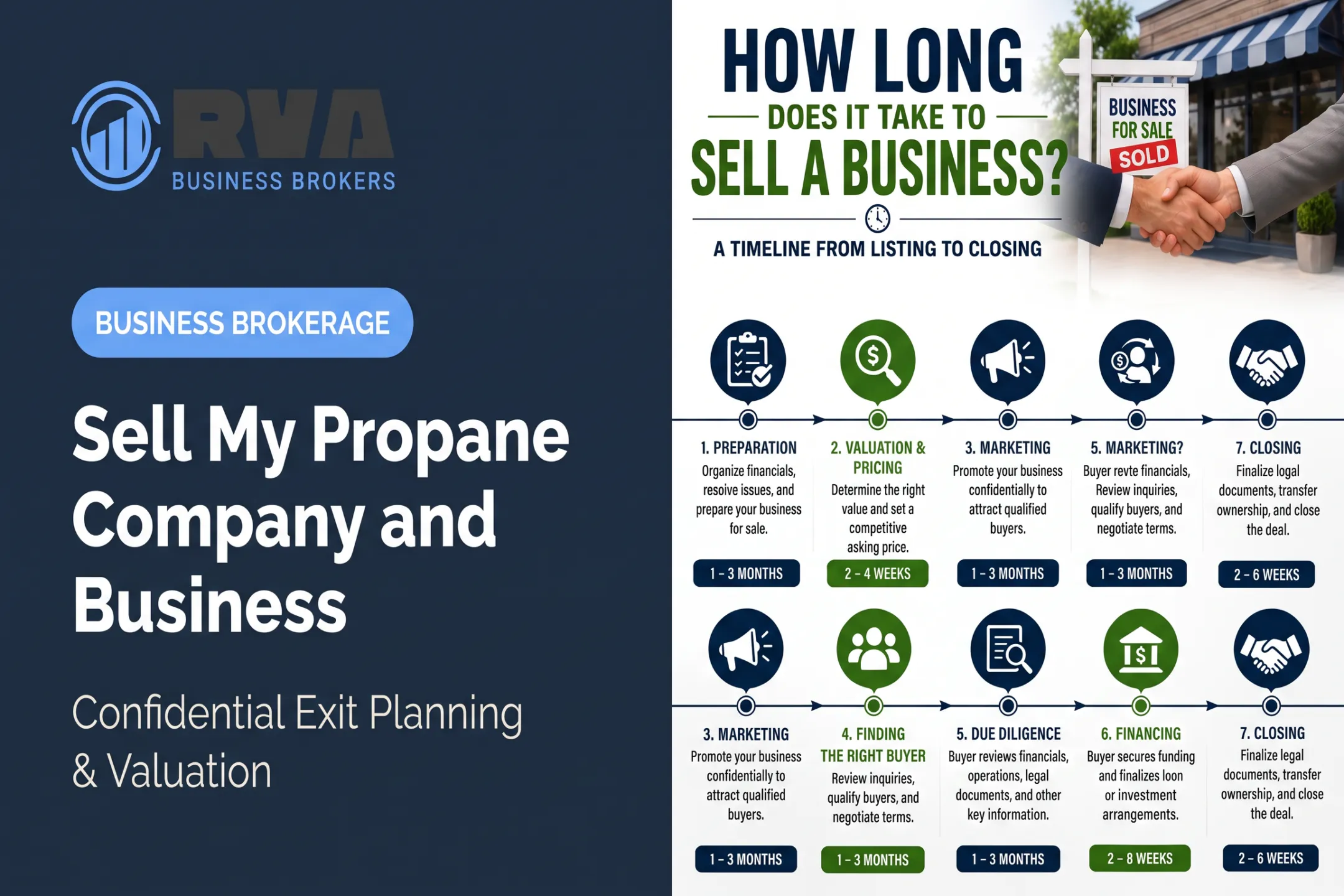
Most Main Street transactions take 6 to 10 months from engagement to closing, while lower-middle-market deals average 11 to 12 months, according to IBBA/M&A Source's Q2 2026 data. Larger or more complex businesses often run longer.
Keeping the Sale Confidential
Confidential marketing protects you from spooking employees, customers, or competitors before a deal is final. That typically means:
- Anonymous business descriptions in early marketing
- Controlled, staged release of financial and operational data
- NDAs before any sensitive information changes hands
- A communication plan for employees and customers, timed around key milestones
A sell-side broker runs those controls along with positioning, buyer outreach, and timeline management. That frees you to keep running the business instead of chasing paperwork.
Mid Atlantic Business Brokers has guided owners across Virginia, Washington D.C., Maryland, the Carolinas, Georgia and Florida through these stages for over 40 years, from confidential marketing through negotiation and closing.
Questions to Ask a Broker Before Hiring One
- How many deals have you closed in my industry and size range?
- Who on your team will actually handle my transaction?
- How do you source and qualify buyers?
- What are your fees, and when are they due?
- What will you expect from me during the process?
Protect Value During Due Diligence, Closing, and Transition
Due diligence is where deals fall apart or get renegotiated. Buyers dig into:
- Financial accuracy and the assumptions behind your valuation
- Legal ownership, contracts, and compliance
- Employee and customer relationships
An Axial review of 75 broken letters of intent found that non-quality-of-earnings findings accounted for 25.3% of failures. Quality-of-earnings and EBITDA discrepancies made up another 21.3%. Unresolved financial questions kill more deals than anything else.

To stay ahead of this:
- Respond to information requests promptly and consistently
- Disclose known issues rather than hoping they go unnoticed
- Keep your accountant and attorney looped in on tax allocation and transaction costs
- Document any post-closing obligations clearly
Planning the Transition
Closing the sale isn't the finish line. A smooth handoff covers:
- Transferring responsibilities and system access
- Communicating with employees and customers on a planned timeline
- Training the new owner or team
- Clarifying any agreed post-sale involvement from you
Most closings wrap up within a few weeks once conditions are satisfied. The transition period that follows often determines whether employees and customers stick around.
Frequently Asked Questions
How much can I sell my company for?
Value depends on earnings, assets, market conditions, industry, transferability, and buyer demand. A professional valuation using income, market, and asset approaches gives you a defensible number instead of a guess.
What does "sale of the company" mean?
It means transferring business assets, ownership interests, or both for agreed consideration. Deal structure affects control, liabilities, taxes, and existing contracts.
When should I start preparing to sell my company?
Ideally one to three years before your target exit. That gives time to clean up financials, reduce risk, strengthen management, and clarify your goals.
How can I sell my business without employees and customers finding out?
Use anonymous marketing, require NDAs before sharing details, qualify buyers before disclosure, and release information in stages. Brief employees and customers only once the deal is firm.
Should I hire a business broker to sell my company?
An experienced broker handles valuation, confidential marketing, buyer qualification, and negotiation. Compare track record, industry fit, and fee structure before you commit.
What documents do I need to sell my business?
Expect to provide financial statements, tax returns, contracts, leases, licenses, employee and customer information, and ownership documents. Exact requirements vary by deal and buyer.