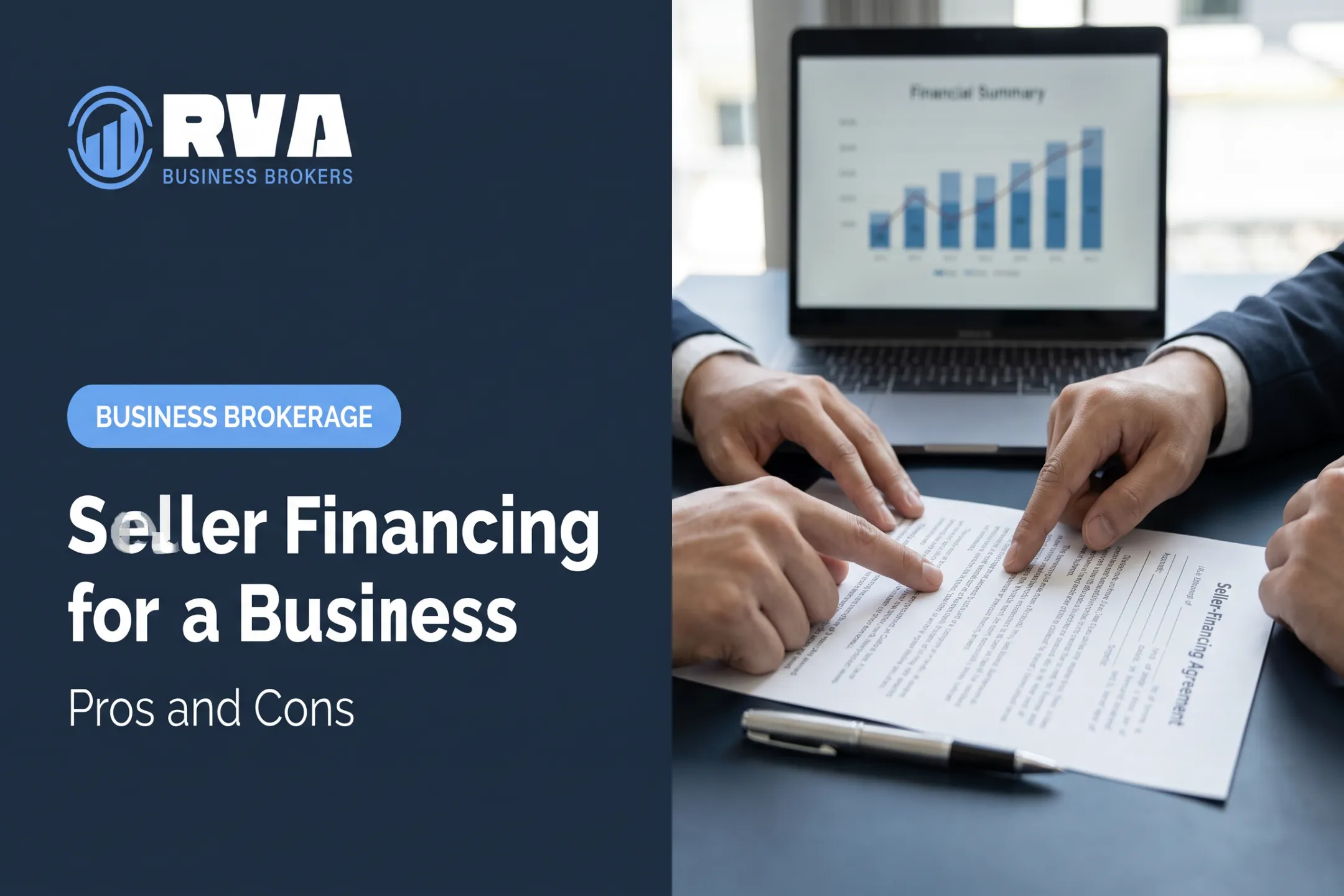

The appeal is obvious: a broader buyer pool, a higher headline price, maybe some interest income along the way. But agreeing to carry a note means the seller becomes a creditor, not someone with cash in hand. Repayment depends on a buyer who may struggle the moment business slows down.
This article breaks down when owner financing genuinely helps a seller, where it creates risk, and what protections belong in the paperwork before anyone signs.
Key Takeaways
- Owner financing can widen your buyer pool and boost total deal value, but it trades immediate cash for repayment risk.
- Vet the buyer's finances, tax returns, and industry experience, not just their down payment.
- Loop in legal and tax professionals early to structure the note, security agreement, and default remedies correctly.
- Always compare the note's expected return against a cash sale before committing.
What Is Owner Financing for a Business Sale?
Owner financing means the seller agrees to accept part of the purchase price over time instead of all of it at closing. The buyer signs a promissory note spelling out the payment schedule, interest rate, maturity date, and what happens if they default.
A typical structure includes:
- A down payment paid at closing (often 50-80% of the price)
- Scheduled principal and interest payments over months or years
- A maturity date, sometimes with a balloon payment due at the end
- Collateral tied to business assets, real estate, or a personal guarantee
Owner financing isn't the only way to bridge a payment gap. It differs from two other common structures in what the seller holds and what drives payment:
| Structure | What the seller holds | Payment depends on |
|---|---|---|
| Owner financing | A debt obligation (promissory note) | Scheduled payments, regardless of future performance |
| Earnout | A contingent right to future payment | The business hitting specific post-closing targets |
| Seller rollover equity | An ownership stake in the business | The company's future value and eventual sale or distribution |
An earnout can pay nothing if targets aren't met. Rollover equity ties the seller's return to how well the new owner runs the business. Owner financing creates a fixed contractual right to repayment, whether or not the note is secured.
The interest rate alone shouldn't drive the decision. Weigh these factors too:
- Liquidity needs at and after closing
- The buyer's realistic repayment capacity
- Collateral backing the note
- How the IRS will tax the arrangement
- Willingness to stay involved after closing to monitor the relationship
Key Advantages of Owner Financing for the Seller
These benefits are real, but none of them are guaranteed. Each one has to be weighed against the risk of a buyer who stops paying halfway through the note.
More Buyers and a Potentially Smoother Transaction
Seller financing bridges the gap when a buyer can run the business well but can't get a bank to cover the entire price. This happens often with service businesses that generate strong cash flow but lack the tangible collateral a traditional lender wants to see.
In BizBuySell's Q2 2026 market survey, 90% of buyers expected seller financing to factor into their acquisition strategy, while only 29% of owners planned to offer it. That gap shows real demand. Buyers are actively looking for sellers willing to carry a note.

Expanding the buyer pool doesn't mean lowering your standards. You still need to determine whether the buyer can realistically repay what they owe.
Potentially Stronger Economics Than an All-Cash Offer
Sellers who finance part of the deal can sometimes negotiate a higher total price or a better interest rate in exchange for accepting payment over time. A bigger contract price still isn't cash in your account.
Here's a simplified example using hypothetical numbers:
- Cash offer: $800,000 at closing
- Financed offer: $850,000 total, with $650,000 at closing and a $200,000 note at 7% interest over 5 years
The financed deal looks better on paper. But you're waiting years for that last $200,000 and the interest that accrues, while carrying the risk that the buyer defaults before paying it off. Compare that scheduled return against what you'd earn investing $800,000 in cash today.
Interest Income and Tax-Timing Considerations
Carrying a note generates interest income, and installment-sale rules can let you spread recognition of eligible gain across the years you receive payments. IRS Publication 537 explains that interest is treated as ordinary income, while depreciation recapture is generally reported in the year of sale, regardless of when you actually collect the cash.
Deferral only postpones the tax bill. Related-party rules, basis allocation, and entity structure all affect the outcome. A qualified tax professional should walk through your specific numbers before you finalize terms.
Greater Influence Over Deal Structure and Transition
Negotiated financing terms can support a smoother handoff, tying payments to training periods, consulting arrangements, or reporting milestones. Keep transition services and the note itself documented separately. Mixing them invites disputes over whether a missed payment also cancels your consulting role.
Owner financing isn't right for every seller. If you need every dollar immediately for retirement, debt payoff, or another acquisition, a cash sale likely serves you better.
What Happens When Owner Financing Is Missing or Poorly Structured
Problems start when sellers accept terms without understanding the buyer, the collateral, and how they will enforce the note if payments stop.
Buyer Defaults Because the Business Can't Support the Payments
Optimistic projections, heavy debt loads, lost customers, or thin working capital can all derail a buyer's ability to pay. Live Oak Bank notes that seller notes must satisfy debt-service coverage requirements and flags losing a major customer as a direct threat to repayment.
Before accepting a note, stress-test:
- Cash flow coverage against all business debt, not just your note
- Customer concentration and recurring revenue
- Seasonality and payroll obligations
- Upcoming capital expenditure needs
The Seller Lacks Enforceable Security or Practical Remedies
A promissory note alone is just a promise. Pair it with a security agreement, UCC-1 financing statement, and guarantees where appropriate. Existing lenders, leased equipment, licenses, or franchise agreements can all limit what's actually available to pledge.
A generic template won't catch state-specific filing requirements or lien priority issues. Use transaction counsel to confirm your security interest is properly perfected.
The Seller Faces a Balloon Payment or Extended Exposure
A buyer current on monthly payments can still fail to refinance or pay a large balloon at maturity. Before accepting that structure, review their realistic refinancing path and expected business performance. Confirm what collateral backs the loan if they can't pay.
Amortizing payments and milestone-based principal reductions reduce this exposure compared to a distant balloon that depends entirely on a future refinancing event.

The Seller Underestimates Administrative and Legal Costs
Tracking payments, monitoring covenants, handling tax reporting, and pursuing collections all take time and money. A professional loan servicer or escrow arrangement can reduce this friction. Legal and tax obligations tied to the note should be reviewed by qualified professionals before closing, not after a payment is missed.
How to Get the Most Value from Owner Financing
Owner financing works best as an underwriting decision, not a marketing tactic to advertise a higher asking price.
Evaluate the Business and Buyer Before Negotiating Terms
Start with a current, defensible valuation using asset-based, income-based, and market-based approaches, supported by financial statements, tax returns, and industry benchmarks. Mid Atlantic Business Brokers supports sellers with confidential valuation and deal structuring, while legal and tax advice stay with your attorney and CPA.
Buyer due diligence should cover:
- Credit history and liquidity
- Source of the down payment
- Relevant operating experience
- References and a realistic post-closing business plan
Set Terms That Reflect Repayment Risk
There's no universal formula for rate, term, or down payment. A sample term-sheet checklist to work from:
- Down payment percentage sized to buyer liquidity and your cash needs
- Interest rate and amortization matched to business cash flow
- Maturity date and any balloon payment
- Prepayment rights and any related terms
- Late charges and default interest
- Grace periods and consequences of missed payments
Terms should reflect the buyer's financial strength and the business's cash flow, not a generic template pulled from another deal.
Secure the Note and Document Protections Properly
Coordinate the purchase agreement, promissory note, security agreement, UCC filing, and any guarantees so they work together rather than against each other. For an operating business, add covenants requiring:

- Maintained insurance and timely tax/payroll payments
- Preserved licenses and permits
- Regular financial statement reporting
- Notice of material adverse events
- Restrictions on unauthorized asset sales
A qualified attorney familiar with secured business transactions should prepare or review these final documents.
Build default monitoring and exit options into those same documents:
- Payment collection method and early-warning notices
- Cure periods and acceleration rights if the buyer defaults
- Whether the note can be sold or assigned if you need liquidity later
- Whether a third-party servicer should administer collections
Agreeing on these points before closing keeps you from improvising under pressure.
Compare Owner Financing With Alternatives Before Committing
Run through this checklist before signing anything:
- How much cash do you need immediately?
- What's your tolerance for buyer default risk?
- How involved do you want to stay post-closing?
- How strong is the buyer's track record and collateral?
- What's your tax position under each structure?
A cash sale may serve you better when certainty and a clean exit matter more than potential interest income.
Conclusion
Owner financing can get a deal across the finish line, or improve the overall economics of a sale. It also creates an ongoing creditor relationship and delays full payment, sometimes for years.
Your decision should rest on:
- A verified business valuation
- Honest assessment of buyer repayment capacity
- Enforceable legal protections
- A clear comparison with a cash sale
Professional valuation and transaction guidance can help you decide whether the proposed terms actually justify the risk. Owner financing should be a deliberate structure, not a last-minute concession made under pressure to close.
Frequently Asked Questions
Who pays closing costs with owner financing?
Closing costs are negotiated between buyer and seller and depend on the purchase agreement, deal structure, and whether a servicer or other professionals are involved. Allocate each cost in writing before closing to avoid disputes later.
Why would a seller do owner financing?
It can attract more buyers, support a higher total price, generate interest income, and ease a planned transition. The trade-off is delayed payment and exposure to buyer default.
Is owner financing a good idea for a business seller?
It can work well when the buyer is well qualified, the business generates enough cash flow to support payments, and the note is properly secured. It isn't automatically the right fit for every seller or every deal.
What happens if the buyer stops paying an owner-financed note?
The seller may have contractual and secured-creditor remedies, including acceleration and collateral enforcement. Actual recourse depends on the documents, lien priority, and applicable state law, and enforcing those rights often requires legal action.
How should a seller evaluate a buyer for owner financing?
Review credit history, liquidity, the source of their down payment, and relevant operating experience. Also check references and confirm the business's projected cash flow can realistically support the scheduled payments.
What documents protect a seller in an owner-financed business sale?
Key documents include the purchase agreement, promissory note, security agreement, UCC-1 filing where applicable, and any guarantees. Have an attorney review all default and covenant provisions before signing.