
Unqualified buyers cost sellers real money. They burn weeks of your time, they sometimes see confidential customer and pricing data they had no business seeing, and they can tip off employees or competitors before you're ready. In IBBA/M&A Source's Q4 2022 survey of business brokers and M&A advisors, unrealistic seller valuation and buyer-side financing problems were cited as the top reasons deals fell apart, not a lack of interested parties.
A qualified buyer combines six things: financial capacity, a credible acquisition plan, relevant skills (or access to them), real decision-making authority, respect for confidentiality, and alignment with your transition goals. This article walks through how to define, screen, verify, and continue requalifying buyers from first inquiry through closing.
Key Takeaways
- Screen every prospective buyer the same way, even one you already know personally.
- Require a signed NDA before releasing financial, customer, or pricing details.
- Confirm proof of funds, financing readiness, and acquisition authority before deep diligence begins.
- Weigh cultural fit and post-closing plans alongside price, not after it.
- Use a business broker as a confidential gatekeeper to widen your buyer pool.
How to Qualify a Buyer
Qualification isn't a single checkpoint. It's a sequence, and each step filters out buyers who shouldn't move forward.
Step 1: Define the Seller's Ideal Buyer Profile
Before you talk to anyone, decide what you actually need in a buyer:
- Financial capacity sufficient for the purchase price plus working capital
- Timeline that matches your own retirement or transition goals
- Industry or management experience relevant to your operations
- Geographic or operational requirements, such as relocating or keeping a physical location
- Your preferred post-sale role (full exit, consulting period, or partial rollover)
Separate what's non-negotiable (licenses stay intact, key staff stay employed) from what's simply preferred. For regulated businesses, this step matters even more.
IDD and disability-support agencies often require license and payer-contract review before a change of ownership can even proceed. Skilled-trade companies typically need a buyer with real operational experience or a qualified manager already in place.
Step 2: Protect Information and Conduct an Initial Screen
Lead with a teaser, a one-page summary with no identifying details, before you reveal anything specific. Once a buyer expresses real interest, require a signed NDA before sharing financials, customer lists, or pricing.
During the initial screen, ask directly:
- Who are you, and what's your acquisition goal?
- What industry or management experience do you bring?
- How much capital is available, and how will the rest be financed?
- What size business and timeline are you targeting?
- Are you buying as an individual, a strategic acquirer, or a financial investor?
IBBA's guidance on serious business buyers recommends that a credible buyer can already define industry, geography, size, and price criteria, and has looped in any spouse, partner, or investor who needs to sign off.
Watch for warning signs early:
- Refusal to sign an NDA
- Vague funding answers
- Unrealistic price expectations
- Pressure to see sensitive data before they've earned it
Step 3: Verify Financial Capability and Authority
This is where tire-kickers get separated from real buyers. Ask for proof of funds, a lender prequalification letter, or committed capital documentation, scaled to how the buyer is structured. An individual buyer and a private equity group won't provide the same paperwork, and you shouldn't request more personal financial detail than the transaction actually requires.
Beyond the purchase price, confirm the buyer can fund:
- Working capital needs after closing
- Transition and integration costs
- Any required capital investments in equipment or systems
If financing involves an SBA loan, SBA 7(a) loans support full or partial changes of ownership, but approval still runs through a private lender and depends on the borrower's creditworthiness, not a guaranteed timeline.
Confirm who actually has authority to sign. Investors, a board, a lending committee, or a business partner can all slow or kill a deal if they haven't signed off early.
Step 4: Interview, Investigate, and Shortlist
A short interview tells you more than a stack of documents. Ask what attracted the buyer to your company, how they'd operate it in year one, and what role they see for you and your existing team after closing.
Then verify what they tell you:
- Employment and management history
- Prior acquisitions, with references from former sellers when possible
- Any litigation or regulatory concerns relevant to your industry
- Whether past deals actually closed as represented
For buyers without direct industry experience, don't disqualify them automatically. Instead, check whether they have a qualified operator lined up, an advisory team, or a credible plan to close the expertise gap.
Step 5: Advance Only Serious Candidates
Release information in stages, not all at once. A secure data room with tiered access works well: basic financials first, then operational detail, then sensitive customer and pricing data as the buyer proves they're serious.
Only schedule management calls or site visits once a buyer has cleared initial screening. Keep requalifying throughout the process. Pause and reassess if:
- Financing terms change
- Diligence surfaces a new issue
- Deal terms shift
- The buyer suddenly goes quiet

When Should You Qualify a Buyer and What Do You Need First?
Qualification starts the moment an inquiry lands in your inbox and continues through the letter of intent, financing, diligence, and closing. Passing the first screen doesn't mean a buyer stays qualified forever.
Preparation Checklist
Before you start fielding inquiries, have these ready:
- A standard buyer questionnaire covering identity, goals, experience, financing, and timeline
- A confidential executive summary with accurate high-level numbers, stripped of anything that could identify customers, employees, or suppliers
- An information-release policy: when an NDA is required, which documents need extra verification, and who may talk to buyers
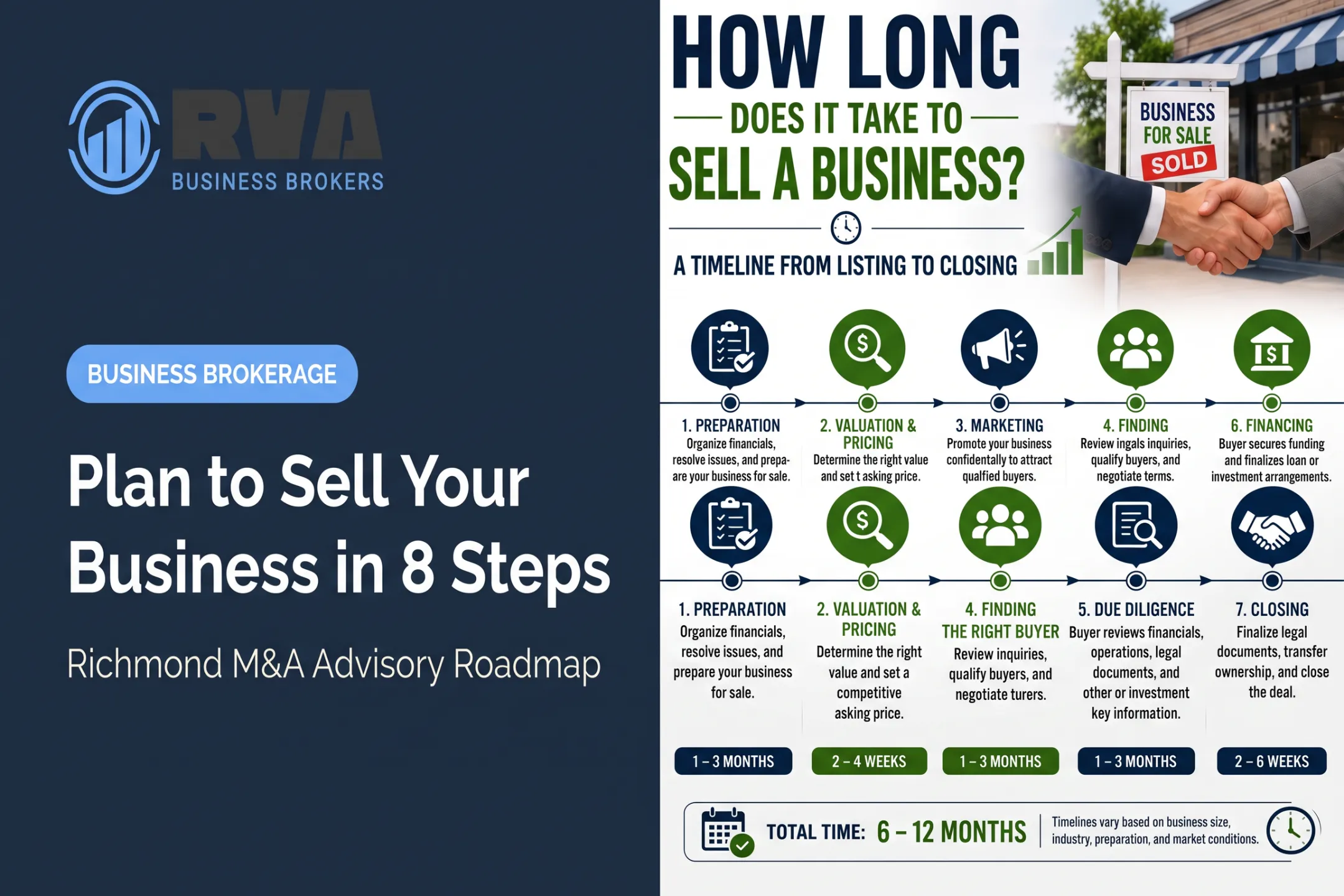
Most Main Street sales take six to twelve months from listing to close. Due diligence alone often runs 30 to 90 days, depending on complexity—build qualification around that timeline.

When Qualification May Require Additional Care
Some situations call for a slower, more rigorous process:
- Direct competitor seeking operational or customer insight
- Complex or layered financing sources
- Limited operating experience in your industry
- Earnout or seller financing in the deal structure
- Sensitive access requested before a real indication of interest
Also research legal, licensing, or ownership-transfer restrictions that could block the buyer from operating your business. Bring in legal and financial advisers for transaction-specific calls.
Key Qualification Factors, Common Mistakes, and Troubleshooting
The strongest buyer is the one most likely to close on acceptable terms—not simply the one with the highest headline number.
Buyer Type and Strategic Fit
| Buyer Type | Primary Motivation | Typical Involvement |
|---|---|---|
| Individual | Ownership, lifestyle, hands-on control | Full-time operator |
| Strategic | Synergies with existing operations | Varies, often integrates business |
| Financial | Return on investment, scalable cash flow | Often keeps management in place |
Verify that the buyer's goals actually match your priorities, not just their funding.
Financial and Transaction Readiness
Beyond proof of funds, check whether the buyer understands your valuation basis: normalized earnings, working capital needs, liabilities, and likely diligence requests. A buyer fixated only on revenue or an advertised asking price hasn't done their homework yet.
Experience, Competence, and Culture
- Evaluate industry knowledge and transferable management skills against the demands of your operation
- Request references from prior sellers or advisors when the buyer has completed deals before
- Ask how they plan to treat employees, customers, and your brand after closing
- Compare their integration plan with your transition goals and timeline
Common Mistakes to Avoid
- Sharing too much, too soon: Tax returns, customer lists, and pricing data should wait for an NDA and basic screening.
- Ignoring financing gaps: If a buyer is enthusiastic but can't show proof of funds, pause deeper diligence until they provide a clear funding timetable.
- Tolerating repeated delays: If a buyer keeps changing terms or goes quiet, document it, reassess, and keep developing other prospects.
- Trying to manage it all solo: If qualification is pulling you away from running the business, bring in a broker or advisors—such as Mid Atlantic Business Brokers—to control communication and protect confidentiality.
Troubleshooting Stuck Buyers
When a promising lead stalls, diagnose the bottleneck before you walk away:
- Silent after NDA: Send one clear follow-up with a deadline; if there’s no reply, move on and keep other prospects warm
- Funds still “coming”: Require a written funding timeline or lender pre-qual before sharing deeper financials
- Terms keep shifting: Document each change, reset expectations in writing, and decide whether the deal still meets your walk-away points
- Culture or ops mismatch surfaces late: Revisit transition and staffing plans early; a poor fit rarely improves in diligence

Alternatives to Managing Buyer Qualification Alone
Owners can screen buyers themselves. Plenty do. But the process eats into management time, risks exposing sensitive data, and gets complicated fast once financing, legal, or tax issues enter the picture.
Business Broker-Led Qualification
A confidential sell-side broker sources multiple prospects, releases information in controlled stages, and verifies seriousness before sensitive details go out. You stay focused on running the business instead of fielding calls from prospects who were never going to close.
Typical broker-led qualification covers:
- Collecting buyer profiles and proof of funds or financing path
- Staging data rooms and coordinating management meetings
- Filtering tire-kickers before employees or customers hear about a sale
Mid Atlantic Business Brokers handles confidential buyer sourcing and exclusive seller representation for owners across Richmond, Arlington, Alexandria, Fredericksburg, Loudoun County, Fairfax County, and Washington, D.C. Support through closing often includes:
- Buyer pre-qualification and controlled information release
- Valuation-informed negotiation and deal structuring
- Lender connections for SBA 7(a) and traditional financing
In one recent engagement, a Richmond-area HVAC owner prioritized protecting employees and culture over the highest offer. The firm matched the business with a strategic buyer that retained roughly 30 employees.
Specialist Adviser Support
Bring in qualified legal, tax, lending, or valuation professionals whenever a buyer's financing, entity structure, or proposed deal terms need specialized review.
A broader buyer pool improves leverage and reduces dependence on any single prospect. Even then, every prospect needs the same qualification and confidentiality controls—no exceptions for buyers you already know.
Conclusion
Qualifying a buyer means verifying financial capability, experience, authority, motivation, confidentiality, and fit with your post-closing goals, not just an attractive offer. Staged disclosure, documented screening criteria, and ongoing requalification through closing reduce wasted time, information risk, and late-stage deal failures.
If you're preparing to sell and want help protecting confidentiality while identifying buyers who can actually close, talk to Mid Atlantic Business Brokers before you enter detailed negotiations.
Frequently Asked Questions
How do you qualify a buyer?
Define your ideal buyer profile, require an NDA before sharing sensitive data, screen their experience and motivation, and verify proof of funds and signing authority. Continue checking references and reassessing readiness all the way through closing.
What qualifications are needed to be a buyer?
Requirements vary by deal size, but include sufficient funding or financing, a credible acquisition plan, relevant business or management capability, real decision-making authority, and willingness to respect confidentiality throughout the process.
What are the three types of buyers?
Individual buyers (owner-operators), strategic buyers (companies seeking synergies), and financial buyers (investors seeking returns). No single type is automatically better. Assess fit against your specific goals for price, timeline, and legacy.