
Introduction
Selling a business fast sounds simple: find a buyer, sign papers, collect a check. In practice, speed depends on far more than buyer interest.
Valuation accuracy, financial preparation, confidentiality, buyer qualification, financing, and due diligence all determine how quickly a deal actually closes. Skip any one of these, and a "fast" sale can stall for months or collapse entirely.
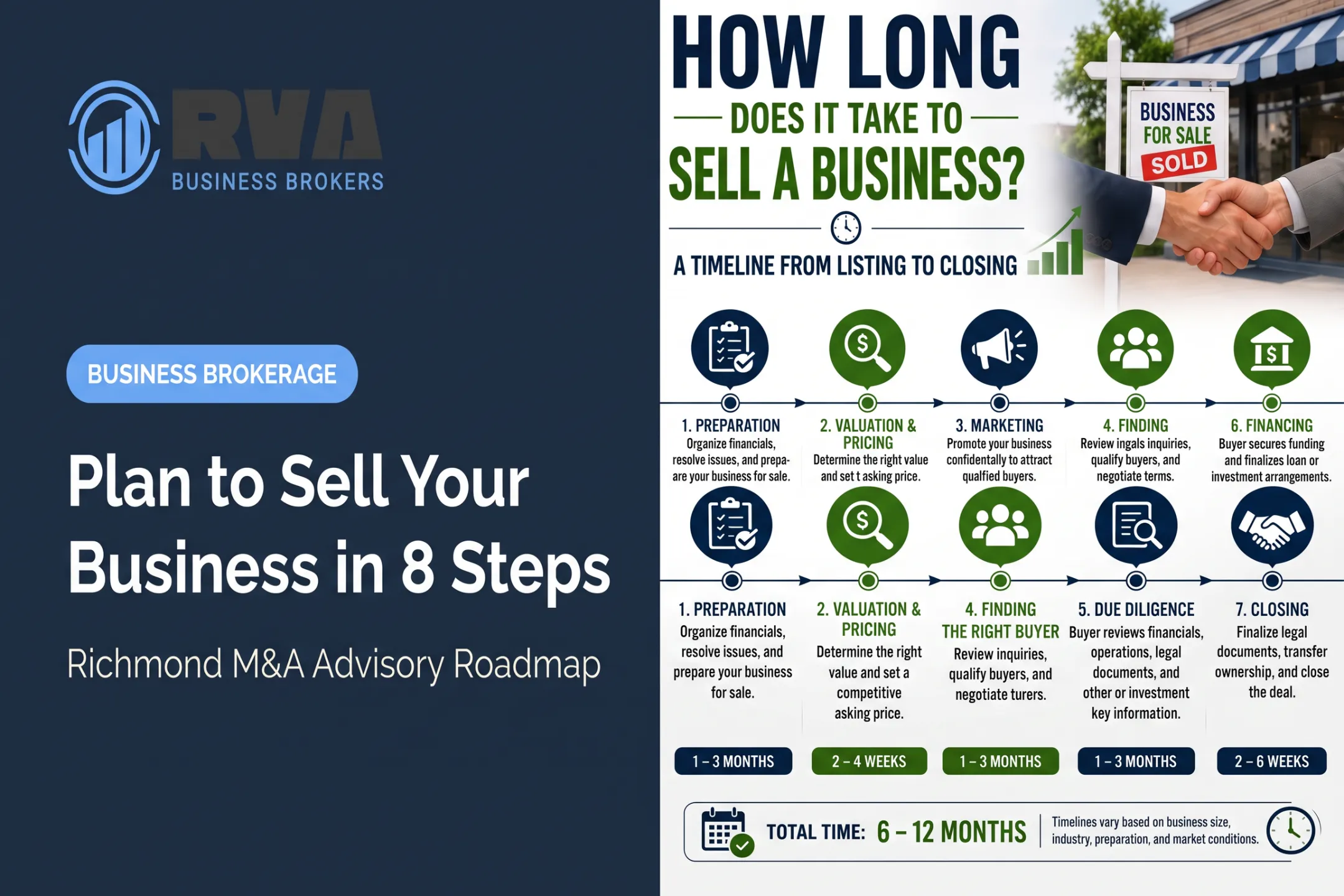
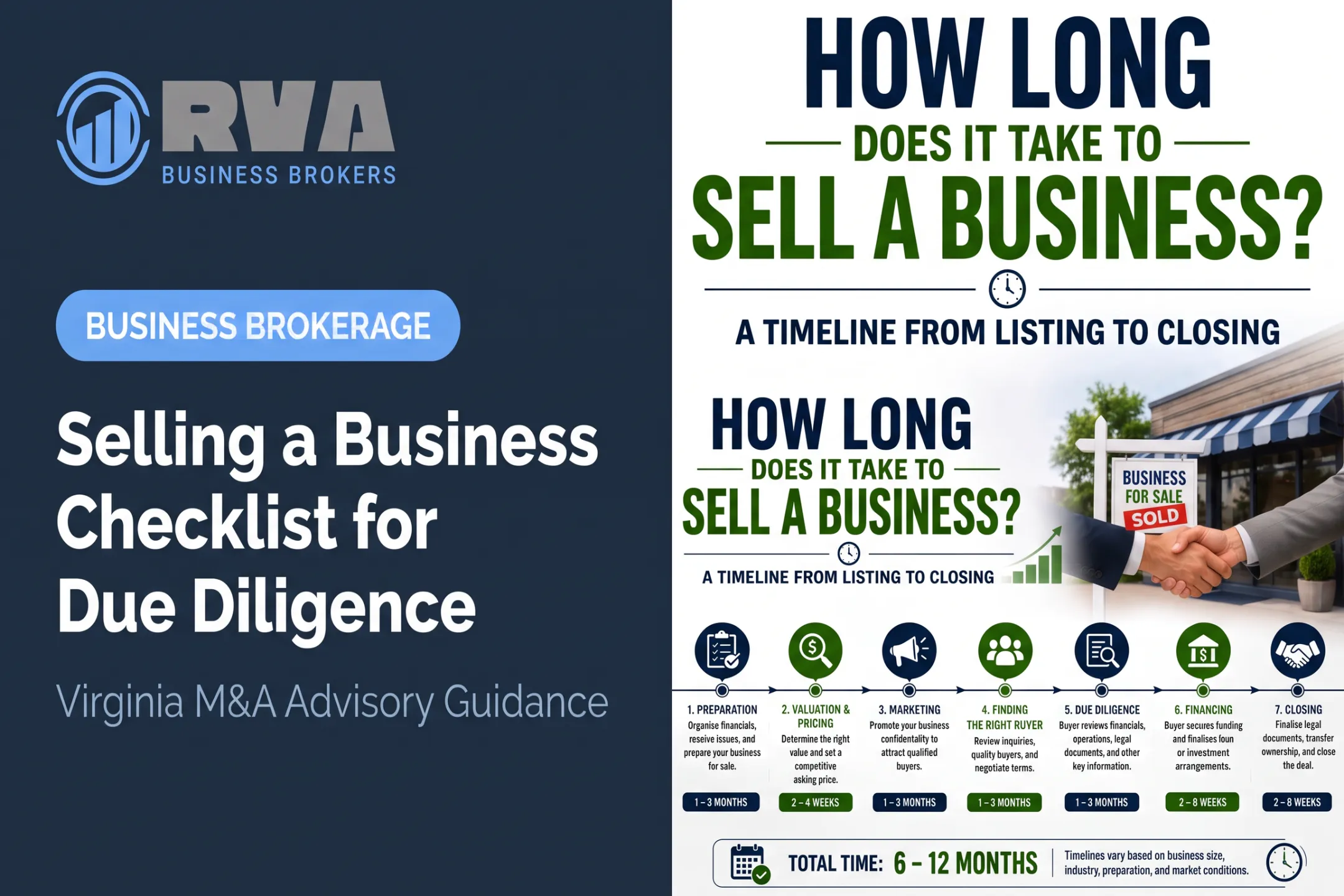
The typical small business sale takes 7 to 10 months, including roughly three to four months of post-offer due diligence, according to the IBBA/M&A Source Q4 2023 Market Pulse survey. An expedited timeline is possible, but only with disciplined preparation.
This guide walks through the practical steps for preparing your business, pricing it defensibly, attracting qualified buyers, and keeping momentum through closing.
Key Takeaways
- Fast sales start with clean records, realistic pricing, and a clear reason for selling
- A professional valuation beats guesswork or online estimates every time
- Confidential marketing and buyer screening remove avoidable delays
- Speed may require flexibility on terms, but never on legal or diligence safeguards
- Most sales take 6-12 months; a few close faster under the right conditions
How to Sell a Business Quickly
Speed comes from sequencing the right work before you ever talk to a buyer. Here's the process, step by step.
Step 1: Decide What "Quickly" Means and Confirm Your Objectives
Before approaching any buyer, define your terms. What's your target closing window? What's the minimum proceeds you'll accept? Do you want cash at closing, or are you open to seller financing or an earnout?
Owners should also nail down:
- Preferred payment structure (all cash, financed, or a hybrid)
- Transition expectations (how long you'll stay on post-sale)
- Non-negotiable terms (employee retention, brand continuity, and so on)
A credible, consistent reason for selling matters more than owners expect. Buyers get nervous when urgency appears without explanation. It raises questions about hidden problems. Retirement, health, relocation, or a new opportunity are all reasonable. Vague urgency is not.
Talk to your CPA and attorney about personal financial needs, tax consequences, and post-sale plans before you set a target price. These conversations shape what "quickly" realistically looks like for you.
Step 2: Make the Business Buyer-Ready
Buyers move faster when they don't have to chase information. Gather these before listing:
- Three to five years of financial statements and tax returns
- Current-year performance and debt schedules
- Leases, contracts, licenses, and permits
- Employee records and customer concentration data
Financial preparation matters more than most owners realize. Inconsistent statements and mismatched schedules generate repeated buyer questions and slow diligence to a crawl, according to AAFCPAs' review of M&A outcomes. Clean books aren't optional if speed is the goal.
You'll also need to normalize your financials by explaining owner compensation, personal expenses run through the business, one-time costs, and related-party transactions. This process, often called recasting, shows buyers the business's true sustainable cash flow rather than numbers skewed by owner-specific choices.
Beyond the numbers, document how the business actually runs:
- Key operating procedures and daily owner responsibilities
- Customer and supplier relationships
- Staffing structure and sales processes
Finally, resolve or disclose any known legal, compliance, licensing, or ownership issues now. Problems that surface during diligence cost far more time than problems disclosed upfront.
Step 3: Establish a Defensible Asking Price and Deal Strategy
Pricing is where most quick sales die before they start. 23% of business advisors named unrealistic seller value expectations as the single most common reason deals fall apart, per the IBBA/M&A Source Q4 2022 survey.
A defensible price comes from a proper valuation, not a gut feeling or a generic industry multiple pulled from a Google search. At Mid Atlantic Business Brokers, Dan Daniel, a former CPA and Certified Business Appraiser, builds valuations using methodologies aligned with USPAP and NACVA standards across three approaches:
| Approach | What it measures |
|---|---|
| Asset-based | Value of assets net of liabilities |
| Income-based | Present value of expected future cash flow |
| Market-based | Comparison to similar businesses that have actually sold |
Your asking price should also account for deal structure, not just a single number. Cash at closing, contingent consideration (earnouts), and seller financing all affect what you actually walk away with. Buyers will negotiate these elements as hard as the headline price.
Avoid treating public business-for-sale listings or generic multiples as a substitute for an analysis specific to your company's earnings quality, growth, recurring revenue, and customer concentration.
Step 4: Market Confidentially and Qualify Buyers
Confidentiality protects your employees, customers, and competitive position while you're still running the business day-to-day. The standard approach:
- Prepare a blind profile: a teaser that describes the opportunity (industry, revenue, location type) without naming the company
- Require an NDA before releasing financials, customer lists, or operational details
- Stage disclosure so sensitive information only reaches buyers who've demonstrated real interest and capability

Not every inquiry deserves your time. Screen buyers for:
- Proof of available capital
- Relevant industry or operating experience
- Clear decision-making authority
- Realistic ability to meet your stated timeline
A broker filters "tire kickers" from buyers who are ready, willing, and able to close, so you spend management time only on conversations that can move the deal forward.
Step 5: Maintain Momentum Through Offer, Diligence, and Closing
Once offers arrive, compare them on more than price. Look at:
- Total value and cash at closing
- Financing risk and contingencies
- Requested diligence period and exclusivity terms
- Transition requirements and probability of actually closing
A letter of intent (LOI) sets the transaction roadmap. It can include both binding and nonbinding provisions, and exclusivity clauses are often binding even when price terms aren't. From there, bring in legal, tax, and accounting professionals for the purchase agreement and diligence process.
Due diligence typically runs 30 to 90 days and covers financial records, contracts, customer relationships, employee information, leases, and licenses. Build a document checklist and data-room structure upfront so buyer requests get answered promptly instead of triggering back-and-forth delays.

Keep operating the business normally throughout. A broker can coordinate communications and reduce avoidable delays, but cannot (and should not) bypass lender, legal, tax, or buyer diligence requirements. Those exist to protect both sides.
When Should You Sell Quickly?
Speed makes sense in specific situations:
- A firm retirement or transition deadline is approaching
- A personal event requires liquidity
- A strategic opportunity demands your full attention elsewhere
- The business is still performing well enough to attract qualified buyers
Speed is a poor fit when:
- Earnings are declining and need remediation first
- Legal or compliance issues remain unresolved
- Valuation expectations are detached from market evidence
- The business depends heavily on the owner with no documented transition plan
- Financial records are incomplete or unreliable
That owner-dependence risk is real. One M&A Source case study describes a potential eight-figure transaction that collapsed because each location's revenue depended entirely on the existing owner. Once that dependence surfaced in diligence, there was no assignable value left, according to M&A Source's case review.
A 30-day test helps here: could the business run smoothly if you took a month off? If not, fix that gap before you set a price.
An operating-business sale also differs from an asset sale when the company is distressed or closing. The right path depends on earnings, assets, liabilities, contracts, and buyer demand, not just your timeline. Treat a quick sale as a defined strategy: fix material weaknesses first, and do not default to the first offer that appears.
What You Need Before Selling Quickly
Preparation and Confidentiality Requirements
Your minimum preparation package should include:
- Organized financials, tax returns, and cash flow statements
- Legal and ownership records
- Contracts, leases, licenses, and permits
- Employee, customer, and supplier information
- A complete list of business assets and liabilities
Loop in your CPA, attorney, and lender early, especially if their records or approvals could affect your schedule. Prepare a concise explanation of the company's strengths, risks, growth opportunities, and transition plan so every buyer conversation tells the same story.
Protect confidentiality from day one. Require NDAs before sharing detailed financials, and keep marketing discreet so employees, customers, and competitors do not learn you are selling before you are ready.
Key Variables That Affect Speed
| Variable | Effect on timeline |
|---|---|
| Pricing | Unsupported or excessive prices reduce qualified interest; well-supported pricing attracts serious offers faster |
| Financial quality | Clean, verifiable records reduce buyer questions and prevent renegotiation during diligence |
| Owner dependence | Documented processes and capable staff reduce buyer concerns about post-closing operations |
| Financing structure | Cash, SBA-financed, and seller-financed offers carry different speed, certainty, and risk profiles |
| Responsiveness | Delayed replies and missing documents stall deals even when buyer interest is strong |
| Market conditions | Buyer demand, industry risk, and financing availability all shape realistic timelines |
On financing specifically, the SBA permits 7(a) loans for complete or partial changes of business ownership and lists a 5-to-10-business-day standard turnaround for its own application review, per SBA's 7(a) loan program page.
That figure covers SBA processing only. Total time to fund an acquisition typically takes additional weeks for underwriting and closing conditions.

Common Mistakes, Troubleshooting, and Alternatives
Mistakes That Slow or Weaken a Sale
- Listing before financials, contracts, and licenses are organized, which triggers repeated information requests
- Pricing off personal investment or revenue alone instead of sustainable earnings
- Revealing the company's identity publicly too early, or skipping NDAs
- Accepting the first interested party without verifying proof of funds and operating capability
- Letting urgency drive concessions without comparing buyer certainty and financing strength
Troubleshooting Common Delays
- Weak buyer inquiries: Revisit asking price, teaser quality, and whether you're reaching the right buyer type for your industry
- Offer cut in diligence: Check inconsistent financials, new liabilities, customer concentration, or gaps in your original materials
- Financing delays: Weigh other capital sources, revised terms, seller financing, or a longer but more certain close with your advisers
Alternatives to a Rapid Third-Party Sale
A rapid sale to an outside buyer isn't always the right fit. Consider:
- Strategic sale to a competitor seeking operational synergies
- Management buyout (MBO), where existing managers acquire ownership
- Family succession or internal transition
- Asset sale or orderly wind-down when the business is distressed (tax and liability effects need legal and tax review)
Each path balances speed, confidentiality, price, and closing certainty differently. A sell-side broker can help you pressure-test readiness, NDAs, and buyer proof of funds, while your attorney and tax adviser should review structure and tax impact before you choose.
Conclusion
The fastest responsible business sales share the same foundation:
- Realistic goals and a clear timeline
- A defensible valuation
- Organized financial and operational records
- Confidential outreach to qualified buyers
- A consistent process from first contact through close
Speed comes from removing preventable delays and deciding promptly—not from skipping valuation, diligence, or legal review.
Mid Atlantic Business Brokers has guided owners across Virginia, Washington D.C., Maryland, the Carolinas, Georgia and Florida through confidential sales for more than 40 years. Work is built on data-driven valuation and sell-side planning matched to each owner's timeline and goals.
If you're considering a sale and want a realistic read on your business, call 804-614-4645 or email dan@rvabusinessbrokers.com for a confidential consultation.
Frequently Asked Questions
How much is my business worth?
Value depends on sustainable cash flow, assets, liabilities, industry, growth, and owner dependence, not a single formula. A confidential professional valuation, rather than a generic multiple, gives you a defensible number buyers will take seriously.
What is the best time to sell a business?
The best time is when you're prepared: financials are clean, operations are transferable, and your personal objectives line up with market conditions. Even owners who need to sell quickly benefit from planning as early as possible.
How long does it typically take to sell a business?
Most small business sales take 6 to 12 months, including 30-90 days for due diligence. Well-prepared, correctly priced businesses in high-demand industries can sometimes close faster, though this isn't guaranteed.
Can I sell my business without a broker?
Yes, but you'll need to handle valuation, confidential marketing, buyer screening, and diligence coordination yourself. Many owners find a broker's buyer network and process management save time and reduce avoidable delays.
What slows down a business sale the most?
Unrealistic pricing and disorganized financial records are the two most common causes of failed or delayed deals. Both are preventable with upfront preparation.